Drainage Diagnostics vs Simple Unblocking: What Works

Last Updated: November 7, 2026
Quick Summary
Simple unblocking removes what is blocking the drain, while drainage diagnostics identifies what caused it. Choose unblocking for a first, one-off blockage that clears fully, and book diagnostics when blockages recur, affect multiple fixtures or sit deep in the pipework.
One blockage is bad luck, but two in the same pipe within a year is a pattern.
Rodding is quicker for a simple plug; jetting cleans where rodding only pokes a hole.
A CCTV survey shows the pipe inside, not the soil, bedding or load around it.
Repeated rodding against a cracked pipe can widen the damage.
We provide 24/7 emergency response and are SafeContractor accredited.
Blocked drain keeps coming back?
We find the cause with CCTV diagnostics and clear it properly.
Table of Contents
Why Clearing a Blocked Drain Is Not the Same as Fixing It
A blocked drain is a symptom, not a diagnosis. When water backs up, the immediate problem is an obstruction somewhere in the pipework. Clearing it restores flow, but it tells you nothing about why the blockage formed in the first place. That distinction sits at the heart of the drainage diagnostics vs simple unblocking question, and it is the one most homeowners only learn after paying for the same clearance twice.
A common pattern is that a drain is rodded, water runs freely, and some months later the same pipe backs up again. Simple unblocking removes what is blocking the drain. Drainage diagnostics identifies what caused it. One solves today's problem; the other prevents the next one.
This guide sets out exactly when a straightforward clearance is the right call, when you need proper diagnostics, and what each option actually costs you in time, money and risk.
Unblocking, Drain Cleaning and Drain Repair: What Each One Does
Drain unblocking is the targeted removal of a single obstruction to restore flow. Drain cleaning is the systematic removal of build-up across a length of pipe. Drain repair addresses physical damage to the pipe itself.
These are three different jobs, and confusing them wastes money. A rodded drain that keeps blocking is not a cleaning problem; it is usually a damage problem wearing a blockage costume. Here is how the three compare:
Job | What it does | Typical method | When it is the right call |
Unblocking | Clears one obstruction | Rods, plunger, jetting | Sudden, one-off blockage |
Cleaning | Removes build-up along the pipe | High-pressure jetting | Slow drainage, recurring grease |
Repair | Fixes damaged pipework | Excavation or lining | Cracked, collapsed or misaligned pipe |
The mistake we see most often is paying for unblocking when the drain actually needs cleaning, or paying for repeated cleaning when the pipe needs repair.
Common Causes of a Drain Blockage and Why They Point to Different Fixes
Different causes leave different fingerprints, and the cause should dictate the fix. A grease blockage responds well to jetting. A root ingress does not: jetting cuts the roots back, but they grow straight back into the same joint. Match the method to the cause and you stop the repeat call-out.
Fat, oil and grease
Fat, oil and grease cool and congeal inside the pipe, narrowing it until waste catches and backs up. This is the classic kitchen drain problem and it is common in pubs, restaurants and hotels where grease volumes are high. Jetting clears it effectively, but without a grease trap or a change in disposal habits, it returns.
Root ingress, scale build-up and pipe damage
Roots find hairline cracks and misaligned joints and force their way in, forming a mat that traps debris. Scale build-up narrows older pipework gradually. Cracked or collapsed sections create ledges where waste snags every time. These causes are structural, and no amount of rodding fixes a broken pipe. If your blockages keep returning to the same spot, check the signs of a collapsed drain pipe before you book another clearance.
Drain Jetting vs Rodding: Which Method Suits Which Blockage
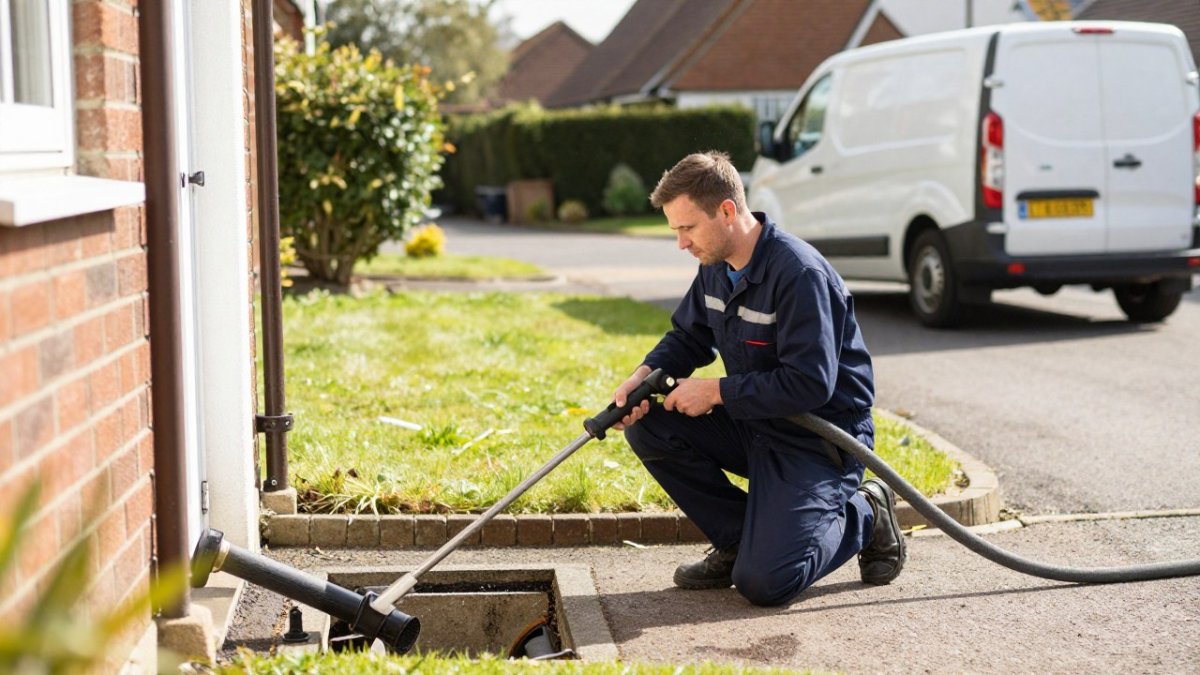
Rodding uses a flexible rod with a cutting head to break through soft obstructions and is effective for localised blockages close to an access point. Jetting uses high-pressure water to scour the full pipe bore, clearing grease, silt and debris along the length of the drain. Rodding is quicker for a simple plug; jetting cleans where rodding only pokes a hole.
For root-related blockages the choice is less clear-cut, because both methods have limits against structural intrusion. We cover the trade-offs in more detail in our comparison of drain jetting vs rodding for tree roots, which is worth reading before you commit to a method.
When a Recurring Drain Blockage Means You Need Diagnostics
A recurring drain blockage is the clearest signal that clearance alone is not working. One blockage is bad luck. Two in the same pipe within a year is a pattern, and patterns have causes that a rod cannot see.
Watch for these signs that diagnostics are overdue:
The same drain blocks more than once in twelve months
Multiple fixtures drain slowly at the same time
Water backs up at one access point when another is used
Gurgling sounds or bad smells persist after clearing
Standing water returns within weeks
Clearing without diagnosing carries real risk. Repeated rodding against a cracked pipe can widen the damage, and a collapsed section left untreated can lead to wastewater escaping into the ground. If you want to break the cycle, our guide on how to stop your drains blocking again and again explains the habits and checks that make a difference.
What a CCTV Drain Survey Can and Cannot Reveal
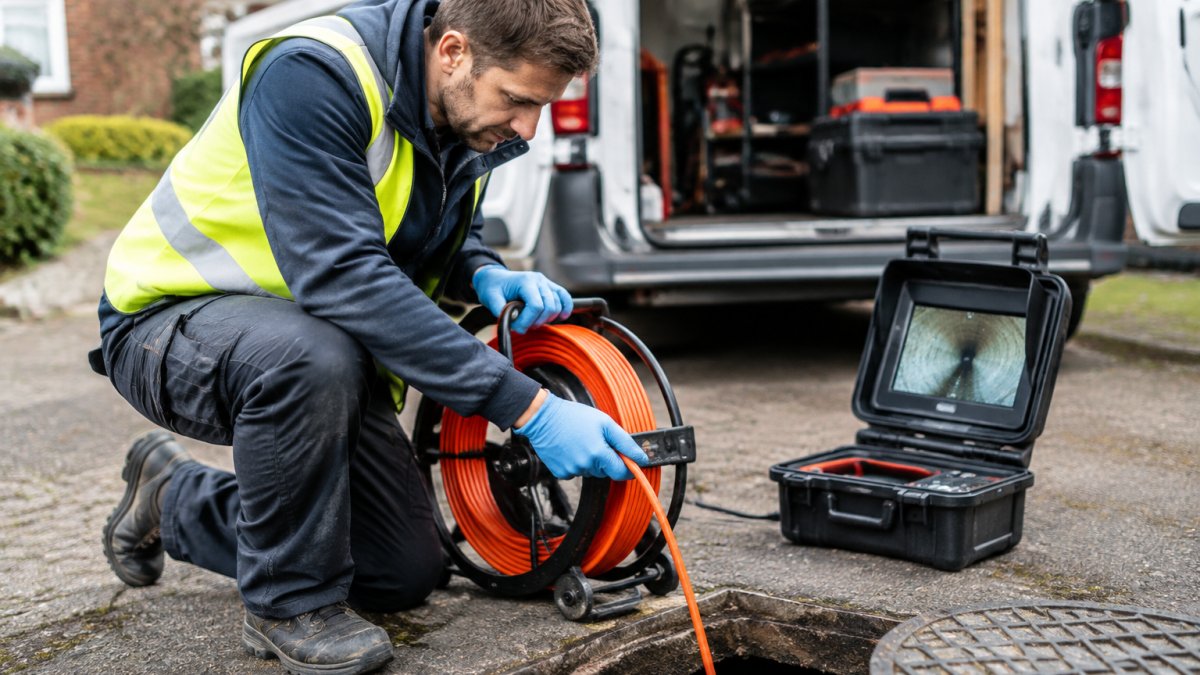
A CCTV drain survey feeds a high-definition camera through the pipe on a reel, recording the internal condition so an engineer can see exactly what is happening. A CCTV drain survey feeds a high-definition camera through the pipe on a reel, recording the internal condition so the findings can be reviewed.

What it reveals
Removable obstructions versus structural causes. A camera distinguishes a grease plug, silt or a soft debris mat, which a clearance can remove, from root ingress through a joint, a cracked pipe or a displaced section, which clearance cannot fix. That distinction is the whole point of diagnostics versus simple unblocking.
The condition of the pipe wall. Scale build-up, corrosion, deformation and joint displacement are visible on camera, so the engineer can judge whether the pipe is serviceable or nearing failure.
The location of the defect. The sonde and locator give a depth and a surface position, which is what a repair quote depends on.
Whether the problem is local or systemic. Surveying multiple runs shows whether one pipe is at fault or the whole network is deteriorating, which changes the recommended next step.
What it cannot reveal
Condition from the outside. A camera shows the inside of the pipe, not the soil around it, the load above it or the bedding that supports it. A pipe can look sound internally and still be at risk from ground movement or external loading.
Structural strength. The survey records what is visible, not a measurement of how much load the pipe can take.
Anything the camera cannot physically reach. A collapsed section, a sharp bend or a pipe too small for the camera head will block the survey, and the engineer will report the limit rather than guess.
The cause of a defect. The camera shows a crack; it does not tell you whether it came from root ingress, ground movement or an impact. That judgement comes from the engineer's interpretation of the footage and the site context.
What it cannot do matters just as much as what it can. If you are weighing up inspection options for an older property, our comparison of the best drain inspection options for older homes sets out how a CCTV survey fits alongside other diagnostics.
Drain Survey Cost and the Follow-Up Costs a Clearance Can Hide
The diagnostics-versus-unblocking decision is not a simple price comparison. A useful comparison looks at the total cost of resolving the problem, separating inspection, unblocking, cleaning and repair. Each has its own cost drivers, and conflating them is how homeowners end up paying twice.
What drives the price of each job
Inspection (CCTV drain survey): priced on access (how many manholes or inspection chambers are opened), the length of pipework surveyed, and whether locating equipment is needed to trace the camera head and mark the defect on the surface. A single-run survey on an accessible domestic drain is at the lower end; a multi-run survey across a larger property, or one requiring a road or driveway to be reopened, sits at the upper end.
Unblocking: priced on access, the method required (rodding versus high-pressure jetting), and the time on site. A soft plug close to an access point is quick; a deep or root-related blockage takes longer and may need jetting rather than rods.
Cleaning: priced on pipe length and the volume of build-up being removed. Jetting a grease-lined kitchen run is a different job from scouring a silted-up surface-water drain.
Repair: priced on the defect, the access needed to reach it, and the repair method, excavation and replacement, or a no-dig lining solution where the pipe is suitable.
Because access, pipe length and defect type vary between properties, pricing depends on the specifics of each job, and current figures are available on our pricing page.
The follow-up costs a clearance can hide
A clearance that fails does not just cost the clearance again. It typically triggers a second call-out, then the inspection that should have come first, then the repair the inspection identifies, plus the disruption of multiple visits and, in the worst cases, damage to flooring, landscaping or the pipe itself from repeated rodding against a defect.
Ask what the follow-up policy is before you book.
For current figures, see our pricing page.
Booking the Right Drainage Diagnostics for Your Property
The right choice comes down to a simple test. If this is a first, one-off blockage and water clears fully, a straightforward unblocking is sensible. If the blockage is recurring, affects multiple fixtures, or sits deep in the pipework, book diagnostics before you spend again.
Best for unblocking: a single sudden blockage with no history. Best for diagnostics: repeat blockages, slow drainage, or a property with older pipework.
We provide 24/7 emergency response, high-definition CCTV technology and hydro-jetting, and we are SafeContractor accredited. For a survey or an emergency clearance, you can book drainage diagnostics.
If your drain has blocked more than once, the next clearance alone will not solve it. BrightFlow Limited offers 24/7 emergency response, high-definition CCTV drain surveys to pinpoint structural faults and root ingress, and hydro-jetting to restore full flow. We are SafeContractor accredited and quote upfront, so you know the cost before we begin.
Frequently Asked Questions
What is the difference between drain unblocking and drainage diagnostics?
Unblocking clears whatever is stopping flow, usually with drain rods, a plunger or high-pressure water jetting. Diagnostics identifies why the blockage happened, using a CCTV drain survey, drain tracing and pipe inspection. A clearance restores flow today; diagnostics tells you whether the pipe is cracked, misaligned or full of root ingress, which decides whether the problem returns. If the same drain has blocked more than once, diagnostics is the step that stops the repeat call-out.
Does drain unblocking identify the cause of a blockage?
Rarely. Rodding and jetting push the obstruction through or wash it away, so the drain runs clear without anyone seeing the pipe wall. That is fine for a one-off blockage caused by fat, oil and grease or debris. It becomes a problem when the cause is structural: a cracked pipe, a collapsed drain or misaligned joints will keep catching waste, and each clearance buys less time than the last. A camera inspection is the only reliable way to tell the difference.
How much does a CCTV drain survey cost?
Drain survey cost depends on access, pipe length and whether drain tracing is needed to follow the run under a building or garden. BrightFlow Limited's current pricing is available on its pricing page, so you can see the figure before booking.
How long does a drain survey take and what happens if it finds damage?
The length of a CCTV drain survey depends on how many access points and runs need inspecting. Survey findings can help identify pipe damage, root ingress or a collapsed section, and the right next step depends on what is found.

Comments