Signs of a Collapsed Drain Pipe to Check For Now

Quick Summary
The main signs of a collapsed drain pipe are slow drains that worsen over weeks, gurgling from toilets or sinks, sewage smells, water pooling in the garden, and repeated blockages that keep returning. A single slow sink is usually nothing serious, but several signs appearing together point to a collapsed drain pipe.
Slow drains that worsen over weeks, not hours, can signal a collapsed drain pipe.
Blockages that return, especially in the same place, suggest the pipe structure may be at fault.
Test each sink, bath and shower: several slow outlets suggest a main drain problem.
Check outside for soft ground, sinkholes, or cracks in paving following the pipe line.
A drain CCTV survey lets an engineer see cracks, displaced joints and root ingress inside the pipe.
Table of Contents
Recognising the Collapsed Drain Pipe Symptoms That Matter Most
Last Updated: 28 October 2026
A collapsed drain pipe rarely announces itself with one dramatic failure. Most homeowners notice a string of small problems that seem unrelated at first. Most of them are easy to spot once you know what to look for. Knowing the signs of a collapsed drain pipe early can help you identify a potential problem.
The most common symptoms include:
Slow drains that get worse over weeks, not hours
Gurgling sounds from toilets, sinks, or shower outlets
Sewage smells inside the home or around external drain covers
Water pooling in the garden, especially near inspection chambers
Repeated blockages that clear for a short time, then return
A single slow sink is usually nothing serious. The problem is when several of these signs show up together, or when they keep coming back after you clear them.
Watch out: Do not keep pouring chemical drain cleaners down a pipe you suspect has collapsed.
How a Collapsed Drain Differs From an Ordinary Blockage
An ordinary blockage is a build-up of material inside a pipe that is still structurally sound. Grease, hair, and soap scum are common causes. Clearing the blockage usually restores normal flow straight away.
A collapsed drain is different. The pipe itself has cracked, sagged, or been crushed, so the waste water has nowhere clean to flow. Clearing the surface blockage often gives only temporary relief, because the damaged section keeps catching debris.
The key difference comes down to recurrence. If a blockage returns, especially in the same place, the structure of the pipe may be a possible cause.
Signs of a Blocked Drain You Can Check Yourself
Before you assume the worst, you can run a few simple checks at home. These will not confirm a collapse, but they help you tell a simple blockage from something more serious.
Run hot water through each sink, bath, and shower. Note which ones drain slowly.
Check whether more than one fitting is affected. A single slow sink points to a local blockage, while several slow outlets suggest a main drain problem.
Lift the cover on an outside inspection chamber. Look for standing water, a strong smell, or debris lines on the pipe.
Watch for water backing up when you flush the toilet or run the washing machine.
Keep a short note of what you see and when.
The checks below can help you tell a simple blockage from something more serious.
Check | What to look for | What it may mean |
Hot water test | Which sinks, baths or showers drain slowly | Single fitting points to a local blockage |
Number of fittings affected | More than one slow outlet | Suggests a main drain problem |
Inspection chamber | Standing water, strong smell, debris lines | Possible fault in the pipe run |
Flush or washing machine test | Water backing up when used | Drain may not be carrying flow |
Outdoor and Structural Warning Signs Around the Property
Some of the strongest clues sit outside the house. Walk around the property after heavy rain and look at the ground above the drain route. Soft patches, small sinkholes, or a sunken line across the lawn can all signal a damaged pipe underneath.
Other signs to note:
Damp patches on walls or floors near external drains
Cracks in paving or driveways that follow the line of the pipe
Plants growing unusually well along one strip of the garden, which can point to a leak
Musty smells in the garden even when the weather is dry
Structural signs inside the home matter too. Damp at the base of walls or unexplained staining on ceilings below bathrooms can indicate a leaking drain. Treat these as a reason to get the drains checked, not as cosmetic problems to paint over.
Confirming the Fault With a Drain CCTV Survey
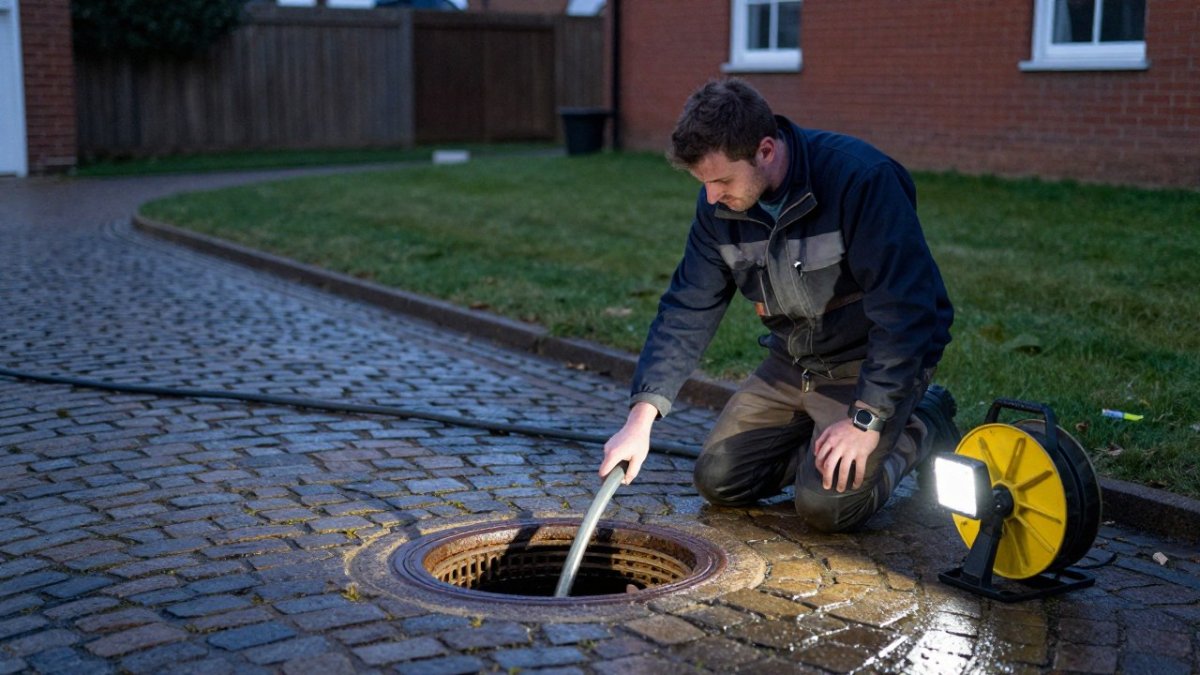
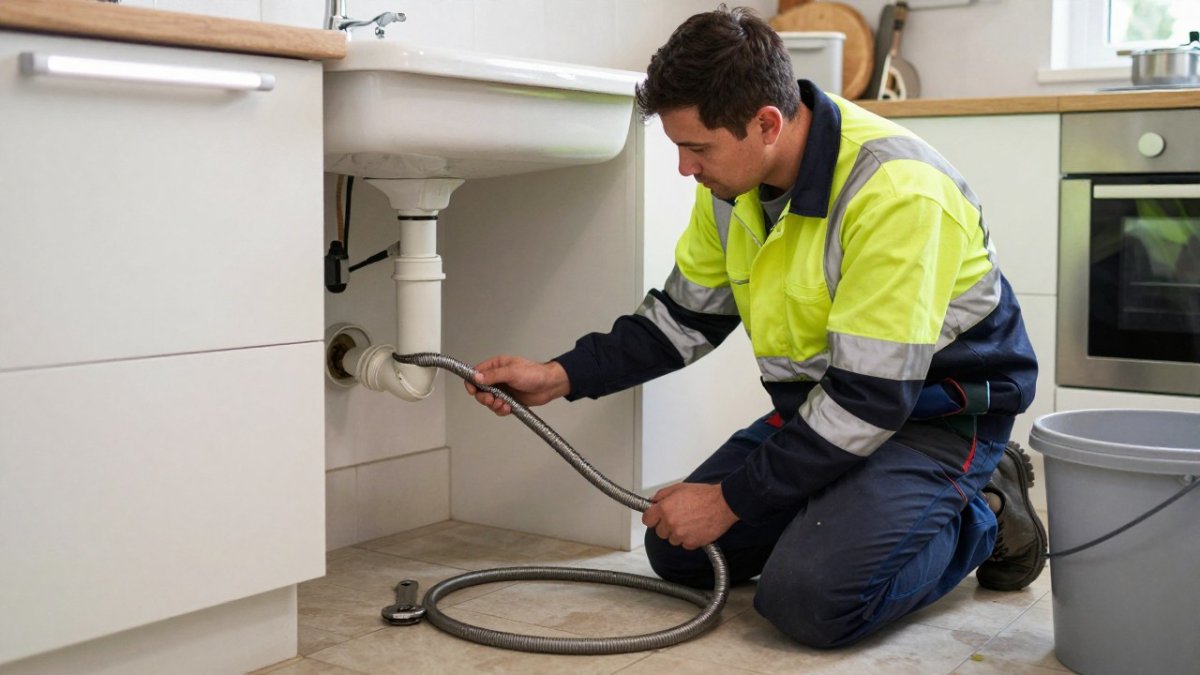
Visual checks only go so far. A drain CCTV survey lets an engineer see inside the pipe. A small camera on a flexible cable travels through the drain, recording cracks, displaced joints, root ingress, and sagging sections. You can see an example of underground drain cleaning work to get a sense of what the underground network looks like.

During a survey, the engineer will typically:
Access the drain through an inspection chamber or cleaning eye
Feed the camera along the pipe run and record the footage
Mark the exact location and depth of any defects
Explain what the footage shows before any repair work begins
A survey can provide information about the condition of the drain. For larger properties, planned inspections as part of commercial drainage PPM can be considered.
Drain Pipe Repair Methods Once the Fault Is Confirmed
Once the survey confirms a collapse, the repair depends on how severe and how deep the damage is. Common approaches include:
Relining: A resin-coated liner is inserted into the existing pipe and cured in place. This avoids digging and suits many cracked or leaking sections.
Patch repairs: A localised repair for a small crack or displaced joint, where the rest of the pipe is in good condition.
Excavation and replacement: Used when a section has collapsed or the pipe is badly misaligned. This is more disruptive but gives a new, lasting run of pipe.
The right choice depends on the pipe material, its depth, and how much of the run is affected. Ask the engineer to explain why they recommend one method over another, and to show you the footage that supports their decision.
Booking Your Drain Inspection With BrightFlow Limited
If several of the signs in this guide match what you are seeing, it is time to get a professional opinion. For urgent problems, you can find emergency drain unblocking in Essex available around the clock.
BrightFlow Limited is SafeContractor accredited and fully insured, and we provide 24/7 emergency response across Essex and East London. Our engineers use high-definition CCTV and advanced hydro-jetting, and we give upfront, honest rates with no hidden surprises. If you need a quote, request one through our website and we will confirm the next steps.
Frequently Asked Questions
What are the signs of a collapsed drain pipe?
The most common signs are repeated blockages that return soon after clearing, gurgling or slow drains across several fixtures at once, foul smells rising from gullies or inspection chambers, damp or soft patches in the garden or along walls, and small sinkholes or uneven ground above the line. Any combination of these, especially if it persists for weeks, is a reason to arrange a drain survey rather than another quick clear. A camera inspection can help assess the drain, since the symptoms overlap with ordinary blockages.
Can a collapsed drain pipe cause bad smells?
Yes. A collapsed drain pipe can be associated with bad smells. Smells may be noticed near gullies, manhole covers or the outlet of a toilet or sink.
How do professionals confirm a collapsed drain pipe?
BrightFlow Limited uses high-definition CCTV technology. A CCTV survey can provide a view inside the pipe.
What should I do if I suspect a collapsed drain pipe?
Note when the symptoms started and which parts of the property they affect, and take photos of any ground movement or damp patches. Then seek professional advice. BrightFlow Limited offers 24/7 emergency response.
Comments