How to Remove Biofilm From Drain Pipes Step by Step

Table of Contents
Last Updated: November 21, 2026
What Biofilm Is and Why It Builds Up in Drains
Biofilm is a thin, slimy layer of bacteria and other micro-organisms that clings to the inside of pipes. It is the reason many drains start to smell or run slowly over time, even when nothing has visibly blocked them. If you are wondering how to remove biofilm from drain pipes, the good news is that it is manageable with the right approach. It is most often found in kitchen sinks, bathroom basins and shower drains.
Biofilm forms when water, food scraps, soap and grease leave a sticky film on the pipe wall. Bacteria settle into that film and multiply. Warm water makes the process faster, which is why kitchen drains often build up more quickly than cold outdoor pipes.
Once the layer is established, it traps more debris. Hair, fat and food particles stick to it, and the build-up grows thicker. Biofilm rarely goes away on its own, so it tends to return unless the drain is cleaned properly and kept clean.
Signs Your Drain Has Biofilm and How It Differs From a Blockage
The most common sign is a bad smell that rises from the plughole, especially after the sink has been used. If you are not sure whether a smell is coming from biofilm or another cause, see the common causes of bad drain smells and how each one is fixed. Many homeowners also notice black or slimy residue around the rim of the drain or on the stopper.
Biofilm and a blockage can look similar from the surface, but they behave differently:
Biofilm: slow drainage, smells, slimy or dark residue, and water that still drains, just more slowly
Blockage: water backs up or pools, gurgling sounds, and a sudden change in drainage speed
Deeper fault: repeated backing up in several fittings at once, or sewage smells that persist after cleaning
If the water is standing for several minutes, or more than one fitting is affected, the problem is more likely a blockage or a fault in the wider drainage system. In that case, cleaning the surface alone will not fix it.
What You Will Need Before You Start Cleaning
Gather these items before you start, so you can work without stopping:
Rubber gloves and eye protection
A flexible drain brush or old pipe brush
A bucket of hot (not boiling) water
Bicarbonate of soda and white vinegar
An old towel to protect the area around the drain
A torch, if you need to see into the trap
Never mix bleach with vinegar or other cleaners. The combination can release harmful fumes (Chemicals - safe use and handling). Use one cleaning product at a time, and rinse the drain thoroughly between treatments.
How to Clean a Smelly Sink Drain Step by Step
A sequenced approach works best: prepare the area, remove what you can physically, flush, treat, and then check the trap. Rushing or mixing products can damage pipes or create hazardous fumes.
Prepare the area and protect yourself. Put on rubber gloves and eye protection. Lay an old towel around the plughole to catch debris and protect the surface. Open a window for ventilation if you are using any cleaning products.
Remove the stopper or strainer. Lift out any cover and clear visible hair, food scraps and soap scum by hand. Dispose of the debris in the bin, not down the drain.
Flush with hot water. Pour a kettle of hot (not boiling) water down the drain to loosen surface grease and soap. Let it sit for a minute, then run the hot tap for another minute. Stop if the pipe feels too hot to touch.
Apply bicarbonate of soda and vinegar (optional). Tip about half a cup of bicarbonate of soda down the plughole, then follow with half a cup of white vinegar. Leave it to fizz for 15 minutes. This can help loosen surface residue but will not kill deep biofilm on its own.
Rinse with hot water. Run hot water for two minutes to clear the loosened residue. If the drain is still slow, repeat steps 3 to 5 once.
Check the trap. If the smell remains, place a bucket under the U-bend, unscrew the trap by hand (or with slip-joint pliers if hand-tight), and empty it into the bucket. Clean the trap with a brush and hot soapy water, then refit it, making sure the washers are seated correctly. Run water to check for leaks.
Watch out: never mix bleach with vinegar, bicarbonate of soda, or any acid-based cleaner. The combination can release chlorine gas or other harmful fumes. Use one cleaning product at a time, rinse thoroughly with water between treatments, and follow the label instructions. If you are unsure, stick to hot water and mechanical cleaning.
If the drain still smells or drains slowly after two rounds, the cause is likely deeper than surface biofilm. In that case, a CCTV survey or professional inspection is the next sensible step.
The steps below summarise the cleaning process, with the timing for each stage.
Step | What to do | Time |
1. Prepare the area | Wear gloves and eye protection; protect the surround with a towel | Before starting |
2. Clear the stopper | Remove debris by hand and bin it | Before flushing |
3. Flush with hot water | Pour a kettle of hot (not boiling) water, then run the hot tap | About 2 minutes |
4. Bicarbonate and vinegar | Half a cup of each, down the plughole | Leave 15 minutes |
5. Rinse | Run hot water to clear loosened residue | 2 minutes |
6. Check the trap | Empty, clean and refit the U-bend; check for leaks | As needed |
Using a Drain Cleaning Brush for Pipes Safely
A drain cleaning brush removes biofilm physically, which chemicals alone often fail to do. When you learn how to remove biofilm from drain pipes, the brush is usually the most reliable tool. Feed the brush slowly into the pipe, turn it gently and pull it back out. Repeat this a few times, then rinse with hot water.

Use the brush with care. Do not force it past a bend or a joint, because this can damage the pipe or push debris further in. If the brush stops suddenly, pull it back and stop. A stuck brush usually means a blockage that needs a professional.
Clean the brush after each use and let it dry before storing it. This stops bacteria from spreading to the next drain you clean.
Troubleshooting Persistent Smells and Slow Drains
If the smell or slow drainage comes back within a few days, check these points:
The trap is dirty or cracked. Remove it, clean it fully, and check for splits.
Vent pipes are blocked. Poor airflow can cause smells even in a clean drain.
Shared drains are affected. If the bath and sink both smell, the problem may sit in the shared branch pipe.
Biofilm is deep inside the pipe. Surface cleaning will not reach it. If your shower drain still smells after unclogging, find out why this happens and what to do next.
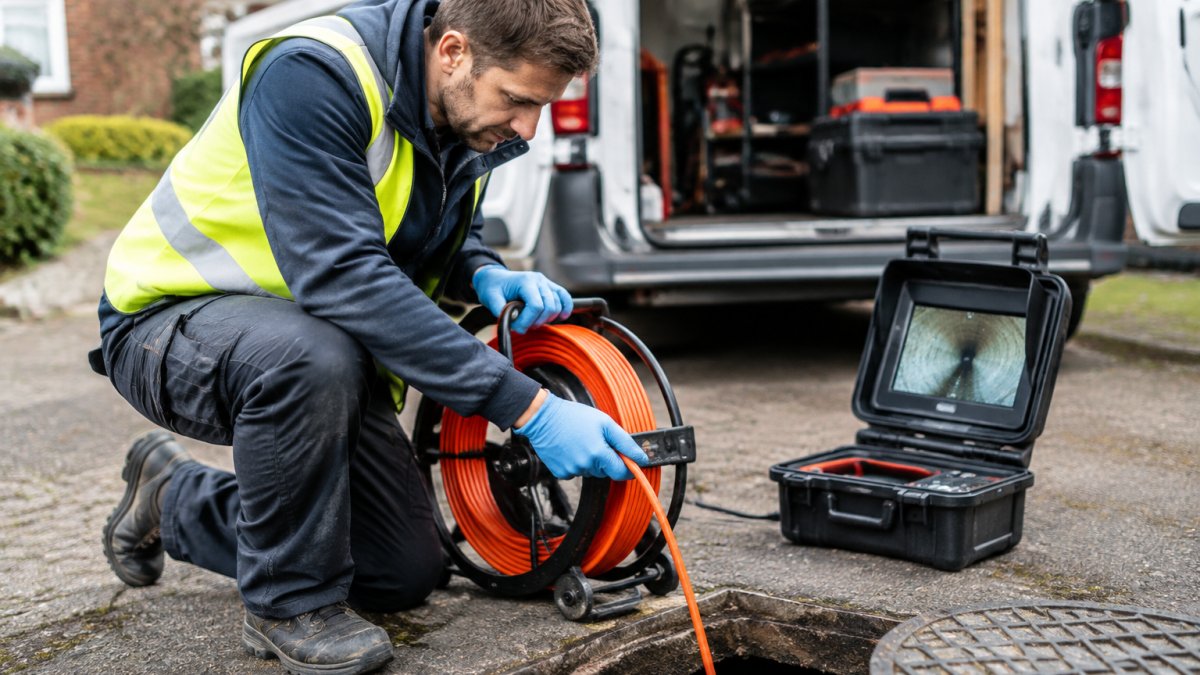
A CCTV drain survey shows the inside of the pipe on a screen, so the source of the problem can be seen. Knowing the cause means the right fix can be chosen, rather than repeated cleaning.
How to Prevent Biofilm in Drains and When to Book a CCTV Drain Survey
Prevention is simpler than removal, but it is important to set realistic expectations: disinfecting alone rarely removes an established biofilm because the film attaches firmly to the pipe wall. If drains keep blocking, read practical steps to stop drains blocking again. A combination of physical cleaning, hot water flushing, and good daily habits gives the best chance of keeping biofilm at bay.
These habits slow down biofilm growth:
Pour a kettle of hot water through kitchen and bathroom drains once a week to melt away grease and soap deposits before they set.
Use a strainer in every plughole to catch hair, food particles and grease. Empty it into the bin after each use.
Never pour cooking fat or oil down the sink. Let it cool and dispose of it in the bin or a sealed container.
After using a waste disposal unit (if you have one), run cold water for a few seconds to flush particles through.
Clean the plughole and stopper weekly with a brush and hot soapy water to remove the early slime layer.
For residents in Brentwood and the surrounding Essex area, local water hardness can affect how quickly limescale and biofilm build up, but the principles above apply regardless. If you live in an older property with original pipework, consider a periodic professional clean as part of your maintenance routine.
Book a CCTV drain survey if:
Smells or slow drainage keep returning within a few days of cleaning.
More than one fitting (for example, both the bath and the basin) is affected.
You notice damp patches, sewage odours, or gurgling sounds from other drains.
You are buying or renting out a property with an older drainage system and want peace of mind.
A CCTV survey shows the inside of the pipe on a screen, so root ingress, cracks, displaced joints, or heavy build-up that surface cleaning cannot reach can be seen. Pricing depends on the job, so request a quote from the BrightFlow Limited website for current details. If you are in Brentwood or nearby, book a drain inspection.
Booking a Drainage Check With BrightFlow Limited in Brentwood
If you are in Brentwood or the surrounding area and the smell or slow drainage has not gone away, BrightFlow Limited can help. BrightFlow Limited is SafeContractor accredited and fully insured, and offers 24/7 emergency response for urgent blockages and sewage back-ups. Our rates are upfront and honest, with no hidden surprises.
For a clear answer on what is causing your drain problem, book a drain inspection with our team. Our team will diagnose the fault first, and pricing is available on the BrightFlow Limited website. If the problem is urgent, you can also arrange emergency drain unblocking, with 24/7 emergency response available.
Frequently Asked Questions
What is biofilm in a drain?
Biofilm is a slimy layer made of bacteria and micro-organisms that stick to the inside of drain pipes. It feeds on food residue, hair, soap scum and other organic matter carried down the plughole, and it thrives in damp, warm conditions. It often appears as black or grey slime and causes slow drainage and unpleasant odours. Because it clings to the pipe wall, it tends to return unless the pipe is cleaned physically and the causes are addressed.
Does boiling water remove biofilm from drains?
Flushing with hot water can loosen fresh, thin biofilm and help wash away grease, but it rarely removes an established layer on its own. Pour near-boiling water slowly, in stages, and only on metal or heat-resistant pipework; avoid it on older plastic pipes, which can soften or deform. Hot water works best as a follow-up to brushing rather than as a standalone fix, and it should never be combined with other cleaning products.
Can bicarbonate of soda and vinegar clear drain slime?
Bicarbonate of soda followed by vinegar can help loosen light surface build-up and reduce odours, but the fizzing reaction does little to remove thick biofilm inside a pipe. Use it as a gentle maintenance step, not a cure. Never mix vinegar or any acid with bleach or other cleaners, as this can release harmful gases. If smells or slow drainage persist after this treatment, the layer is likely too established for household methods and a professional inspection is sensible.
When should I call a drainage professional about a smelly drain?
Call a drainage professional if the smell returns within days of cleaning, if several sinks or toilets drain slowly at once, or if you notice gurgling, damp patches or sewage odours around the property. These signs can point to a blockage or fault further down the drainage system rather than surface biofilm. BrightFlow Limited offers 24/7 call-out, so you can get a diagnostic visit when the problem is urgent. Pricing depends on the job, so request a quote from the BrightFlow Limited website for current details.
Comments