How to Stop Your Drains Blocking Again and Again

Quick Summary
Drains keep blocking because a clear removes the blockage but not its source, such as fat and hair build-up, or a structural fault like tree roots or a cracked pipe. If the same point blocks repeatedly, the cause is usually still in the pipe, so a camera survey is the best way to find it. Preventing drains blocking starts with binning cooled fat, fitting hair catchers and never flushing wet wipes.
Fat, oil and grease are the most common cause of kitchen blockages.
Fit a hair catcher over every shower and bath plughole and clean it weekly.
Wet wipes do not break down and should go in the bin, even if labelled flushable.
A blockage that recurs at the same spot often points to a structural fault.
Book a professional inspection if blockages return within a few weeks of clearing.
Table of Contents
Why Your Drains Keep Blocking Instead of Clearing for Good
Last Updated: November 5, 2026
If your drains keep blocking, you are not alone.
A blocked drain is a build-up that stops water from flowing freely through a pipe. It can sit in a sink trap, a shower outlet, a toilet, or an external gully.
Here is the key point. A plunger or a drain unblocker can shift the blockage, but it leaves the source in place.
Common Causes of Blocked Drains in Kitchens and Bathrooms
Most repeat blockages start in the kitchen and bathroom. The materials below build up slowly, so the drain seems fine until it suddenly is not.
Fat, oil and grease in kitchen drains
Fat, oil and grease are the most common cause of kitchen blockages. When hot fat goes down the sink, it cools and clings to the inside of the pipe. Food scraps then stick to it and form a thick plug.
Pour cooled cooking oil into a container and bin it
Wipe pans and plates with kitchen roll before washing up
Use a sink strainer to catch food scraps
Hair, soap residue and wet wipes
Bathroom drains block in a different way. Hair tangles around the pipe wall, and soap residue binds it into a dense mat. Wet wipes are the worst offender. They do not break down like toilet paper, so they catch on pipe joints and trap more debris.
Fit a hair catcher over every shower and bath plughole
Bin wet wipes, even if the packet says "flushable"
Clean the hair catcher weekly
The table below sets out the main sources of repeat blockages in kitchens and bathrooms, with the usual cause and a practical fix for each.
Source | Why it blocks | Fix |
Fat, oil and grease | Cools and clings to the pipe, then traps food scraps | Bin cooled oil; wipe pans with kitchen roll |
Food scraps | Catch on built-up fat and form a plug | Use a sink strainer |
Hair | Tangles around the pipe wall | Fit a hair catcher over every plughole |
Soap residue | Binds hair into a dense mat | Clean the hair catcher weekly |
Wet wipes | Do not break down and catch on joints | Bin them, even if labelled flushable |
Structural Causes: Tree Roots, Cracked and Misaligned Pipes
Sometimes the problem is not what goes into the drain but the drain itself. These faults are hidden underground, so the signs can be easy to miss. Unlike a grease or hair blockage, a structural fault will keep catching debris no matter how often you clear the pipe, because the pipe itself is creating the trap.
Tree roots
Tree roots seek out moisture and can squeeze into small cracks or loose joints. Once inside, they grow and catch debris.
Root ingress is most likely where there are mature trees, hedges or large shrubs within a few metres of a drain run, and it is more common in older clay pipework with cemented joints than in modern plastic systems.
Cracked, collapsed and displaced pipes
A crack or collapse lets soil in and creates rough surfaces where waste collects. Ground movement, age, heavy vehicle loading over a shallow drain and previous poor repairs can all cause it. A displaced pipe is one that has shifted so the joints no longer line up; a collapsed pipe has lost its shape entirely. Both create a lip or ledge inside the run where solids settle instead of moving along.
Misaligned joints
Misaligned joints create a dip or lip where solids settle instead of moving along. This is often an installation fault rather than damage, and it can sit unnoticed for years until enough debris has gathered to slow the flow. The tell-tale sign is a blockage that always recurs at the same point in the run, even when the rest of the pipe is clear.
How to tell a structural fault from a disposal problem
Use the pattern of the blockage as a guide:
Same spot every time: A structural fault is more likely than a disposal habit, because the pipe is trapping debris at one point.
Blockages that follow heavy rain: Water surging through a cracked or displaced pipe can wash soil in, so a problem that appears after storms points to damage rather than grease.
Slow drainage across several fixtures with no obvious waste: A partially collapsed or root-filled section downstream will affect everything connected above it.
Confirming any of these usually needs a camera survey, which lets an engineer see inside the pipe and identify roots, cracks, displacement or collapse before any clearing work is planned.
Do not assume a recurring blockage is grease just because the drain is in a kitchen. If the same point blocks repeatedly after thorough cleaning, consider a camera survey rather than another round of chemical treatment.
A Symptom-Led Diagnosis: Working Out Where the Blockage Sits
The signs you notice can point to the location of the problem. Use the list below to narrow it down before you call for help.
One sink or basin slow, others fine: The blockage is likely in that sink's trap or the branch pipe serving it.
Several fixtures slow at once: The problem is probably further down, in a shared drain or stack.
Water rises in the shower or toilet when you use the sink: A blockage in the main drain is a strong possibility.
Note how often it happens and whether it follows a pattern. If you have narrowed down where the problem sits, a local domestic drainage service can diagnose and fix it. A blockage every few weeks in the kitchen points to grease.
How to Clear a Blocked Drain Safely, in Order
Work through these steps in order. Stop as soon as the water drains freely.

Check for an obvious blockage. Remove the sink strainer or shower cover and clear any visible hair or debris by hand. Wear gloves.
Try a plunger. Block the overflow hole, seal the plunger over the plughole and push firmly several times. Use a plunger built for sinks or baths, and keep a towel handy.
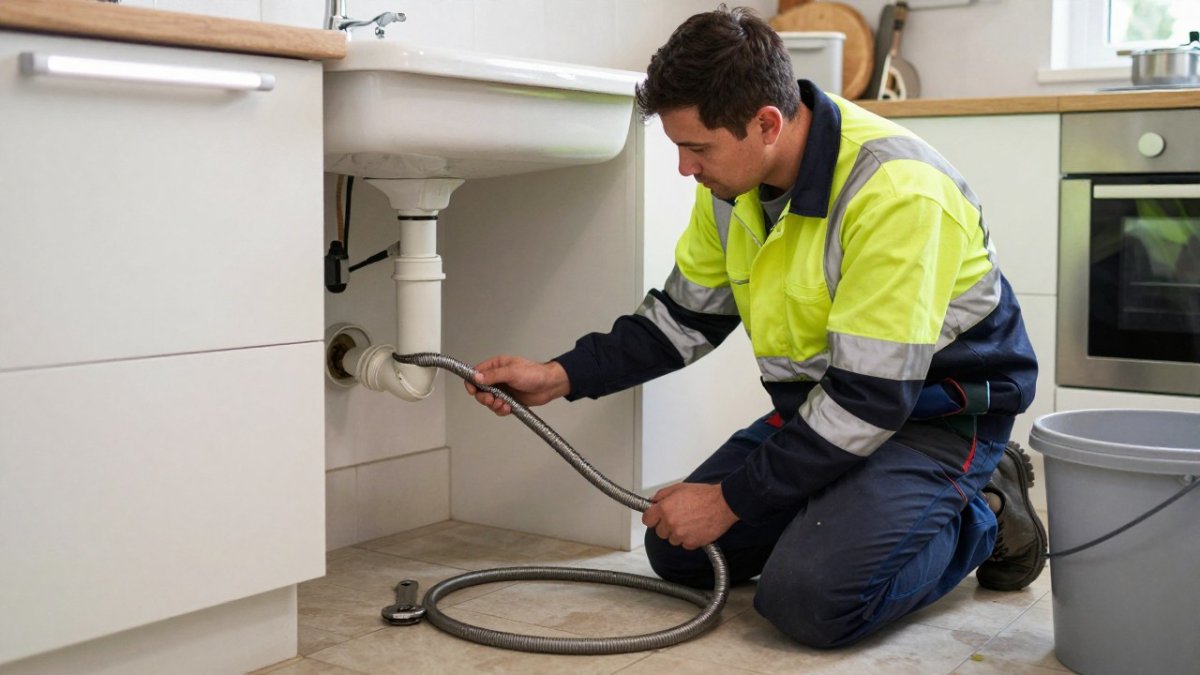
Clean the trap. Place a bucket under the U-bend, unscrew it by hand, and empty and rinse it. Check the pipe above and below.
Use hot water and washing-up liquid. Once the trap is clear, pour in a kettle of hot water to flush the pipe. Avoid this if the pipes are plastic and the water is boiling.
Use a drain snake for stubborn blockages. Feed the snake slowly down the pipe, turning as you go, then withdraw it slowly.
Know when to stop. If the water is still slow, or if several fixtures are affected, stop DIY work and call a professional.
Watch out: Do not mix chemical drain unblockers with plunging or with other products. Chemical unblockers can damage older pipes, and the fumes can cause harm in a small room. If a chemical product fails to clear the blockage, it will not fix the cause either.
How to Prevent Blocked Drains From Coming Back
Prevention is generally simpler and cheaper than repeated call-outs. The habits that keep a kitchen sink clear are not the same as those that protect a shower, a toilet or an outside gully, so treat each drain on its own terms.
Kitchen sink
Bin cooking fat and oil once it has cooled, and wipe pans and plates with kitchen roll before washing them.
Use a sink strainer and empty it into the bin rather than washing the contents down.
Run cold water for 15 to 20 seconds after washing up with fat or food residue.
Shower, bath and basin
Fit a hair catcher over every shower and bath plughole, and clean it weekly rather than waiting for it to overflow.
Wipe soap residue and shaving foam from the basin rather than rinsing it down in quantity.
Once a month, flush the waste with hot water and a little washing-up liquid to shift the soap film that binds hair to the pipe wall.
Toilet
Keep wet wipes, cotton buds, sanitary products and kitchen roll out of the toilet, even when a packet says "flushable". They do not break down like toilet paper and will catch on joints.
Use only toilet paper and human waste, and bin everything else.
Outside gullies and inspection chambers
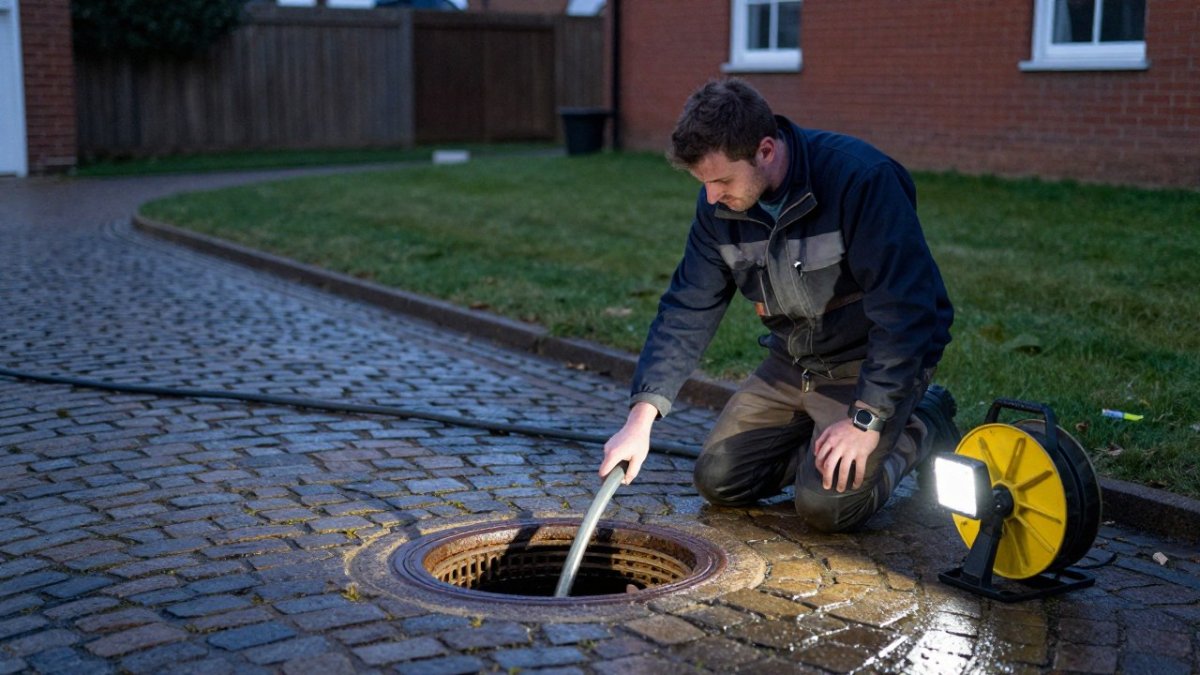
Check outside gullies and inspection chambers each season, and clear leaves, moss and silt from the grating before they wash into the run.
Look for slow drainage, standing water or a change in smell, and note any change in how fast water clears.
Keep planting in mind: if you are adding trees or large shrubs, check where the drain runs before you dig, because roots will find a loose joint over time.
Who is responsible, and when to escalate
Responsibility for a drain depends on where it sits.
Book a professional inspection if any of these apply:
Blockages return within a few weeks of clearing them
Several fixtures drain slowly at the same time
Water backs up into the shower, bath or toilet
At BrightFlow Limited, we start with an accurate diagnosis. Our high-definition CCTV surveys show where the blockage sits and whether a pipe is cracked, displaced or affected by root ingress.
Our team is SafeContractor accredited and fully insured. If your drains keep blocking, request a quote and we will explain what we find and what it will cost before any work begins.
Drain Maintenance Tips and When to Book a Professional Inspection
Regular maintenance catches small problems before they become emergencies. Check outside gullies and inspection chambers each season, look for slow drainage, and note any change in how fast water clears.
Book a professional inspection if any of these apply:
Blockages return within a few weeks of clearing them
Several fixtures drain slowly at the same time
Water backs up into the shower, bath or toilet
At BrightFlow Limited, we start with an accurate diagnosis. Our high-definition CCTV surveys show where the blockage sits and whether a pipe is cracked, displaced or affected by root ingress.
Our team is SafeContractor accredited and fully insured.
Frequently Asked Questions
Why does my drain keep blocking after it has been cleared?
A drain that clears but blocks again usually still has the cause in place. Clearing removes the plug of debris you can reach, but grease, residue or a fault further down the pipe keeps building up. If the blockage returns within weeks, the material probably sits lower in the line or the pipe itself is damaged, so a camera inspection gives a clearer answer than repeated clearing.
Can tree roots cause a drain to keep blocking?
Yes. Roots grow towards moisture and can find small cracks or loose joints in underground drains, then spread inside the pipe and catch debris. Repeated blockages in an outside drain or a shared sewer are a common sign. A CCTV survey shows whether roots are present and where, which decides whether the pipe needs clearing, repair or replacement.
Is it safe to use chemical drain cleaner for repeated blockages?
Chemical drain unblockers can clear light build-up, but they are a poor fix for a recurring blockage. They may only move the problem, can damage older pipes and seals, and are hazardous if mixed or used in a blocked sink you then try to unclog by hand. If a drain has blocked more than once, avoid repeated chemical use and arrange an inspection instead.
When should I call a drainage professional about a recurring blockage?
Call a professional if the drain blocks again within a short period after clearing, if several fittings back up at once, if you notice gurgling or smells, or if water rises in a shower or toilet when another appliance drains. These signs point to a blockage further down the system or a structural fault, which needs a camera inspection rather than more DIY clearing.
Comments