Drain Jetting vs Rodding for Tree Roots: Which Works Best

Quick Summary
Drain jetting is generally the stronger choice for tree roots, because high-pressure water cleans the full pipe wall, whereas drain rodding usually opens only a narrow channel through the blockage. Jetting removes more root matter, but it does not seal the joint the roots entered through, so a CCTV survey is advisable before clearing.
Rodding opens a narrow path, while jetting scours the full pipe wall.
Jetting with a cutting nozzle can remove roots along a wider section of pipe.
Old or fragile pipes need pressure control, so the operator should know the material.
A CCTV survey before clearing shows root entry points and the state of the pipe.
Clearing roots does not repair the joint, so regrowth is likely without a repair.
Table of Contents
How Drain Rodding and Drain Jetting Work
When a drain backs up, two methods dominate the conversation: mechanical rodding and high-pressure jetting. Both clear obstructions, but they do it in very different ways, and roots make the choice more complicated.

What drain rodding is and how it works
Drain rodding is a mechanical method. An operator feeds a series of flexible rods, sometimes called a drain auger or snake, into the pipe. A cutting head at the end breaks up or pulls through the obstruction. Rodding is generally quick, and it suits simpler blockages such as hair, soap scum or a compacted plug of debris.
Rodding has a clear limit. It works through a narrow channel in the centre of the blockage, so it often leaves the pipe walls coated. Grease, silt and fine root hairs can remain attached to the sides, and they tend to rebuild the blockage over time.
What drain jetting is and how it works
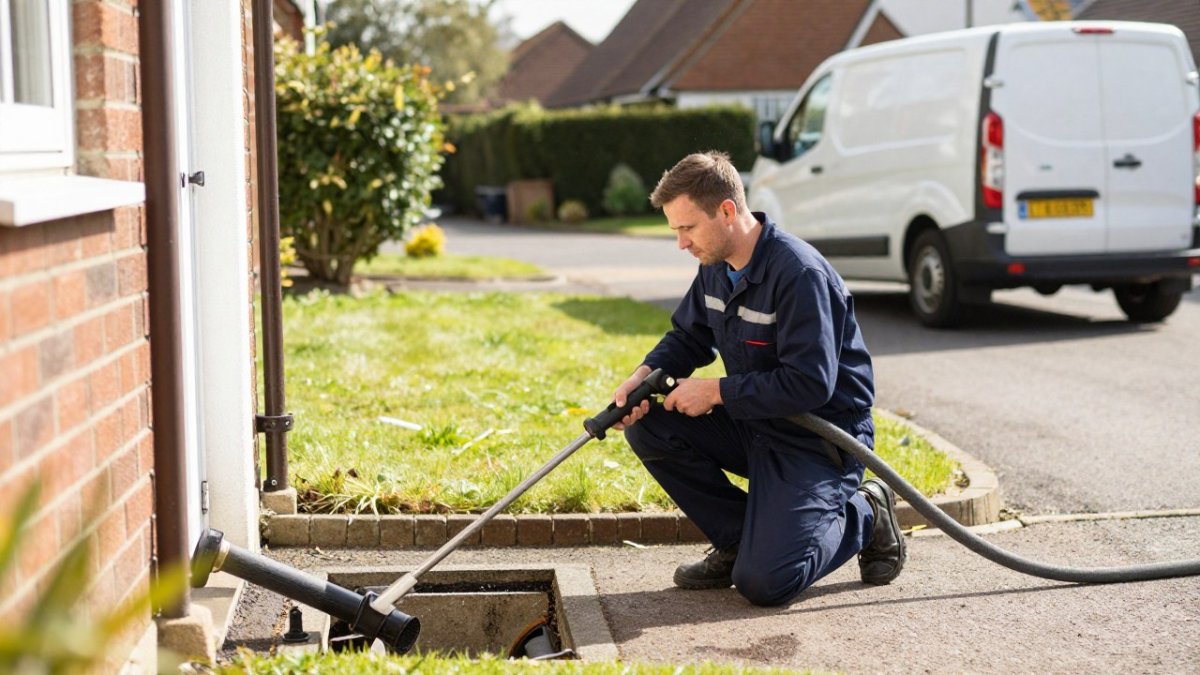
Drain jetting uses a high-pressure water hose fitted with a nozzle. The nozzle pushes water along the pipe, scouring the walls and flushing debris downstream. A cutting nozzle can also be used to cut through roots. Because the water works across the full pipe diameter, jetting generally cleans more thoroughly than rodding.
Jetting does require skill and the right equipment. Operators must control water pressure carefully, because excessive force can damage older or fragile pipework.
Key Differences Between Jetting and Rodding
The main difference is how much of the pipe each method cleans. Rodding opens a path. Jetting cleans the walls too. That distinction matters most for recurring blockages.
Factor | Drain rodding | Drain jetting |
How it clears | Mechanical cutting or pulling | High-pressure water scouring |
Pipe wall cleaning | Limited | Thorough |
Typical use | Simple, localised blockages | Grease, scale, roots, recurring blockages |
Speed | Quick | Slower set-up, thorough finish |
Risk to old pipes | Lower with care | Requires pressure control |
Rodding can be a reasonable first option for a single blockage with a clear cause. Jetting may cost more per visit, but it often lasts longer. Pricing depends on the job, so BrightFlow Limited's website has current prices and a quote can be requested.
Does Drain Jetting Remove Roots, and Does Rodding?
Tree roots are one of the hardest blockages to clear permanently. Roots grow towards moisture and enter through cracked joints. Once inside, they form dense mats that catch paper, grease and debris.
Rodding can cut through root matter, but it usually removes only the portion in the immediate path. The surrounding roots often regrow within months. Jetting, with a cutting nozzle, can remove roots along a wider section of the pipe. Even so, it does not repair the joint that let the roots in, so the cause remains.
A common approach is to clear roots by jetting, then confirm the pipe condition with a CCTV survey. That combination tells you whether the roots are a surface problem or a structural one. Recurring root blockages usually need a repair, not repeated clearing.
Pipe Condition, Age and Material: Can Jetting Damage Old Drains?
Pipe material and condition should shape the method you choose, and this is where a generic 'jetting is stronger' answer falls down. High-pressure water is only safe when the operator knows what the pipe is made of and what state it is in.
How pipe material changes the decision
Clayware: common in older properties and often laid in short sections with cemented or push-fit joints. Roots exploit these joints, and the same joints are the weak points under pressure. Jetting is usually fine at reduced pressure, but a joint that is already displaced or cracked can be opened further.
Cast iron: can be sound for decades but corrodes from the inside, leaving a thin, brittle wall. A cutting nozzle or aggressive rodding head can catch on a corroded lip and crack the pipe.
Plastic (uPVC and similar): generally tolerant of jetting, but solvent-welded joints and older push-fit seals can be disturbed by a nozzle passing at speed. Plastic is also more prone to deformation if a nozzle stalls.
Pitch fibre and other legacy materials: found in some mid-century drains and prone to softening and collapse. These need low pressure and a careful survey before any mechanical or water-based clearing.
What pressure control actually means
Jetting machines allow the operator to vary pressure and flow, and the nozzle type matters as much as the pressure setting. A penetrating nozzle concentrates force to clear a path; a flushing or wall-cleaning nozzle spreads water across the pipe. For fragile drains, the sensible approach is a lower-pressure pass first, then a camera check, then a higher-pressure pass only if the pipe is sound. Rodding is not automatically gentler: a cutting head or a corkscrew auger can snag on a root mass or a cracked wall and tear the pipe as it is pulled back.
Watch out: jetting an old pipe at full pressure without knowing its condition can turn a small crack into a collapse, and a collapse is a repair job rather than a clearing job.
Practical checks before work starts
Ask the engineer what pressure they intend to use and why, whether they have surveyed the pipe, and whether the nozzle is suited to the material. Before accepting any figures, use this checklist for vetting a commercial drain repair quote. A competent operator will want to know the pipe material, the depth, the access points and whether the drain has had previous repairs. If the answer is 'we always use full pressure', that is a reason to get a second opinion.
When the pipe is already damaged
If a survey shows a cracked, displaced or collapsed section, clearing is only part of the job. Jetting or rodding may restore flow temporarily, but the damaged section will keep catching debris and roots. In that situation the honest advice is to plan a repair, and to use clearing only to keep the drain running until the repair can be done.
Why a CCTV Drain Survey Comes Before Any Clearing
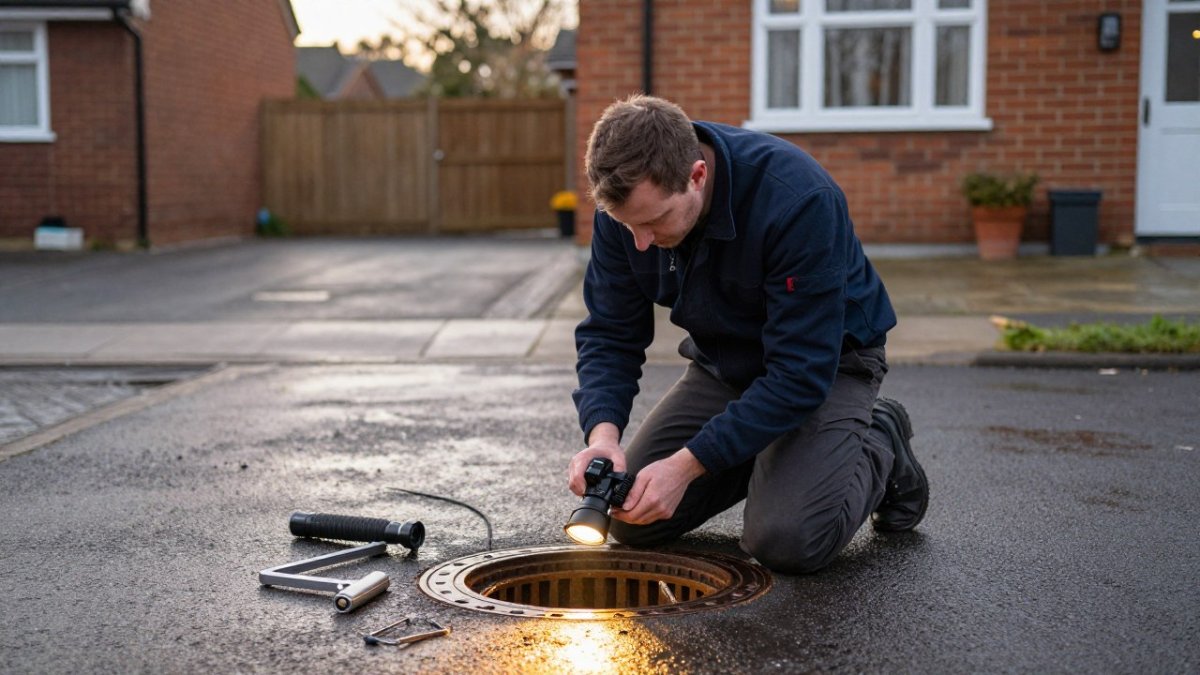
A CCTV drain survey shows the inside of the pipe. It identifies root ingress, cracked joints, sagging sections and grease build-up. Without it, the clearing method is a guess.
A survey before clearing is generally advisable when roots are suspected or the blockage keeps returning. Homes in Essex and East London can arrange CCTV surveys and jetting from the same provider. The footage can show the location of the root entry and the state of the pipe around it. It also helps decide whether the drain needs jetting, rodding or a structural repair.
Surveys can also give homeowners a record of pipe condition, which may be useful when comparing quotes or dealing with a landlord or managing agent. Homeowners in the area can UK government guidance on drainage responsibilities to understand who is responsible for a shared or private drain.
Short-Term Clearance, Regrowth and Root Ingress Drain Repair
Clearing a root blockage is a short-term fix unless the entry point is sealed, and this is the part most comparisons leave out. Cutting or jetting roots removes the growth inside the pipe; it does not close the crack, joint gap or displaced section the roots came through.
Why roots come back
Roots grow towards water and nutrients, and a drain leaking at a joint is a reliable supply of both. Once a root hair finds the entry point, it thickens and branches, and the same pathway is reused. That is why regrowth is common within months rather than years, and why a drain that blocks every autumn is usually showing a structural problem rather than a cleaning problem. The clearing method affects how much root is removed and how clean the pipe is left, but it does not change the fact that the entry point is still open.
What follow-up inspection should confirm
After roots are cut, a CCTV survey is the only reliable way to confirm the pipe is clear and to see the state of the wall around the entry point. The survey should show whether the root mass has gone, whether the joint is cracked or displaced, and whether there is any deformation or loss of section. Ask for the footage and a written summary, because it becomes the baseline for deciding whether to repair now or monitor.
Repair options and what they involve
Localised joint repair: sealing or re-pointing a single failed joint, often the least disruptive option where the pipe is otherwise sound.
Patch lining or a short reline: a resin-impregnated liner is pulled or pushed into the damaged section and cured in place, sealing cracks and joint gaps without excavation in many cases.
Full-length relining: used where several sections are affected or the pipe is deteriorating along its length.
Excavation and replacement: necessary where the pipe has collapsed, is badly displaced or where lining is not suitable.
Each option has different access requirements and disruption, and the right choice depends on the survey findings rather than on the clearing method used.
Planned maintenance versus one-off clearing
Where roots are a recurring problem and a repair is not immediately possible, scheduled jetting paired with periodic CCTV checks can keep the drain running and track whether the condition is worsening. Facilities and landlords can look at planned commercial drainage maintenance to prevent repeat root blockages. This is common on commercial sites and in properties with mature trees close to the drainage run.
Watch out: treating repeated root blockages as a cleaning problem alone can allow a small joint defect to develop into a displaced or collapsed section, which turns a modest repair into a larger excavation.
Regrowth is not always a failure of the clearing method. It usually signals that the root source remains, and the footage from a follow-up survey is the clearest way to show that to a homeowner, landlord or managing agent.
Preventing Tree Roots in Drains and Choosing Your Next Step with BrightFlow
Prevention starts with knowing where the roots are coming from. Keep trees and shrubs a safe distance from drain lines, and avoid planting near known weak joints. Flushing drains with hot water helps with grease, but it does not stop roots.
If you have had repeated blockages, start with a CCTV survey. BrightFlow Limited offers CCTV surveys and jetting services, and you can check current prices on the BrightFlow Limited pricing page or request a quote.
Our team is SafeContractor accredited and fully insured. Contact BrightFlow Limited to request a quote and arrange a survey before the next blockage.
Frequently Asked Questions
Is drain jetting or mechanical rodding better for roots?
Drain jetting is generally the stronger option for tree roots because the high-pressure water and cutting nozzle can cut through fine root growth and scour the pipe wall, while a rod mostly punches a narrow hole through the blockage. Rodding is quicker and usually cheaper for a simple obstruction, but it often leaves the root mass partly in place. Because BrightFlow Limited quotes depend on the job, confirm the method and cost against a survey before work starts.
Can drain rods remove tree roots from a drain?
Rods can clear a channel through roots, which restores flow temporarily, but they rarely remove the whole root system. Roots that are left behind tend to regrow, and the blockage can return within months. Rodding is best seen as a short-term measure when the root ingress is light or when you need the drain working quickly while a longer-term repair is planned.
Should a CCTV drain survey be carried out before jetting?
Yes. A CCTV survey shows where roots have entered the joints, how far they extend, and whether the pipe is cracked, displaced or collapsed. That information decides whether jetting is safe and effective, or whether the pipe needs relining or excavation.

Comments