7 Things to Check Before Accepting a Commercial Drain Repair Quote

Last Updated: October 31, 2026
Quick Summary
A commercial drain repair quote should list the diagnostic survey, method, labour, materials, access equipment, waste disposal and reinstatement as separate lines. Ask for these in writing so that quotes can be compared on like-for-like terms.
Check whether a CCTV survey is included, charged separately, or excluded entirely.
Ask for labour shown by trade and day or half-day, not a buried lump sum.
Confirm waste disposal, including any hazardous classification, is stated as its own line.
Request every contractor's estimate by the same deadline and in the same format.
Ask for assumptions and exclusions to be written down, and for variation triggers to be explained.
Table of Contents
A common pattern in commercial drainage work is that a client receives two or three quotes for the same job and cannot tell which one is actually comparable. One quote covers the jetting, another quotes a CCTV survey, and a third skips both. Choosing the cheapest figure on the page is rarely the right decision. Knowing what a commercial drain repair quote should include is the first step to comparing them fairly, and it is the focus of this guide.
Commercial drainage is not a domestic job scaled up. Facilities managers, restaurant owners and managing agents need repairs that minimise closure time, produce a written record, and hold up to scrutiny from landlords or insurers. The seven checks below help you test any quote before you accept it.
What a Commercial Drain Repair Quote Should Include
A commercial drain repair quote should set out the diagnostic work, the proposed method, the labour, materials, access requirements and any disposal costs as separate lines. A single lump sum with no breakdown makes comparison almost impossible. Ask for the scope of work in writing before you agree to anything.
The difference between two quotes for the same fault often comes down to what each one silently excludes. The checklist below is designed to expose those differences before you commit.
Diagnostic and investigation costs
CCTV survey: is it included, charged as a separate line, or excluded entirely? Ask whether the footage and a written condition report are supplied to you.
Locating the fault: is tracing and marking the affected section included, or will it be charged as a variation once work starts?
Trial holes or inspection chambers: if access is uncertain, confirm whether opening up is priced in.
Labour, materials and access equipment
Labour should be shown by trade and by day or half-day where possible, not buried in a lump sum.
Materials should name the pipe type and fittings where known (for example, clay, concrete, uPVC or cast iron), because specification drives price.
Access equipment, mini-excavators, pipe relining rigs, confined-space kit, traffic management, should be listed separately. Equipment that appears only after the work begins is a common source of dispute.
Waste disposal and reinstatement
Waste removal and disposal should be a stated line, including any hazardous waste classification.
Reinstatement of surfaces after excavation, tarmac, paving, concrete or soft landscaping, should be priced or explicitly excluded, with the standard of finish described.
Out-of-hours, emergency and call-out charges
Confirm the standard working window and the premium applied outside it.
Ask whether the call-out fee is credited against the repair if you proceed.
Check whether a second attendance for the same fault is chargeable.
VAT and payment terms
State clearly whether prices are inclusive or exclusive of VAT at the prevailing rate.
Confirm payment terms, deposit requirements and whether stage payments apply to larger works.
Assumptions, exclusions and variation triggers
Every quote should list its assumptions (for example, "assumes no root ingress beyond the first chamber").
Exclusions should be explicit rather than implied.
Ask what would trigger a variation and how it would be priced and approved before work continues.
Watch Out A quote that says "drain clearance" without naming the method, the section of pipe or the disposal arrangements leaves room for a second visit and a second bill. Treat any unexplained lump sum as a prompt to ask for a written breakdown.
A quick like-for-like test
Before comparing totals, place the quotes side by side and tick off: survey included, footage supplied, method named, access equipment listed, waste disposal stated, reinstatement described, out-of-hours rate stated, VAT position clear, assumptions written down. The quote that answers all nine is the one you can actually compare on price.
The table below sets out the quote elements the article says to check, so the quotes can be compared on equal terms.
Check | What to look for | Why it matters |
CCTV survey | Included, separate line, or excluded | Shows whether diagnosis is priced |
Labour | Shown by trade and day or half-day | Avoids a buried lump sum |
Materials | Pipe type and fittings named | Specification drives price |
Access equipment | Listed separately | Stops surprise charges mid-job |
Waste disposal | Stated as its own line | Includes hazardous classification |
Reinstatement | Priced or explicitly excluded | Covers surface finish after excavation |
Out-of-hours | Premium rate stated | Confirms the call-out and surcharge |
VAT and payment | Inclusive or exclusive, terms clear | Makes totals comparable |
How to Request a Commercial Drain Repair Quote Effectively
Send every contractor the same information so their prices can be compared on equal terms. If grease trap work is part of the job, see how to book commercial grease trap cleaning in Essex. Give them the building type, the number of drainage outlets affected, the symptoms you have observed, and any previous repair history. Note whether the site operates out of hours, because that changes access and cost.
For a commercial site, the brief you send is as important as the quote you receive. A contractor who understands your access constraints, trading hours and health and safety requirements will price the job more accurately, and is less likely to return with variations once work begins.
What to put in your written brief
Site details: building type, use (for example, restaurant, office, school, retail unit), approximate age of the drainage system if known, and the number of outlets, gullies, interceptors and inspection chambers affected.
Symptoms and history: when the problem started, whether it recurs, any previous repairs, and whether neighbouring properties or shared runs are involved.
Access arrangements: where vehicles can park, whether a permit or traffic management is needed, gate codes, keyholder details and any restricted areas.
Operating hours and quiet windows: state when the site trades or operates and when disruptive work is acceptable. A kitchen that serves lunch and dinner has narrow windows for excavation.
Health and safety requirements: ask for risk assessments and method statements (RAMS) in advance, confirm insurance and accreditations, and state any site induction or permit-to-work requirements.
Business continuity expectations: say whether the site must remain open, whether temporary drainage or isolation is acceptable, and who authorises additional work on site.
Set a common deadline and format
Ask each contractor to return a written estimate by the same date and in the same format, broken down by the line items covered in the previous section. Request that assumptions and exclusions are listed explicitly. A contractor who will not put assumptions in writing is telling you something about how the final invoice will look.
Questions to ask before you accept
Who will attend, and are they directly employed or subcontracted?
What is the guaranteed response time, and is it written into the quote?
Will the same team carry out any follow-up repair?
What warranty or guarantee applies to the work, and for how long?
Can you speak to a comparable commercial client as a reference?
Pro Tip Keep a single comparison sheet for every quote you receive. Record the survey position, method, access equipment, disposal, reinstatement, out-of-hours rate, VAT and assumptions against each contractor. It turns a pile of PDFs into a decision you can defend to a landlord, insurer or finance team.
A clear brief and a consistent quote format do most of the work of comparing commercial drain repair prices. The remaining judgement is about response commitments, guarantees and evidence, which is why the next sections look at surveys and repair methods in more detail.
Commercial Drain Survey: Evidence Before Repair
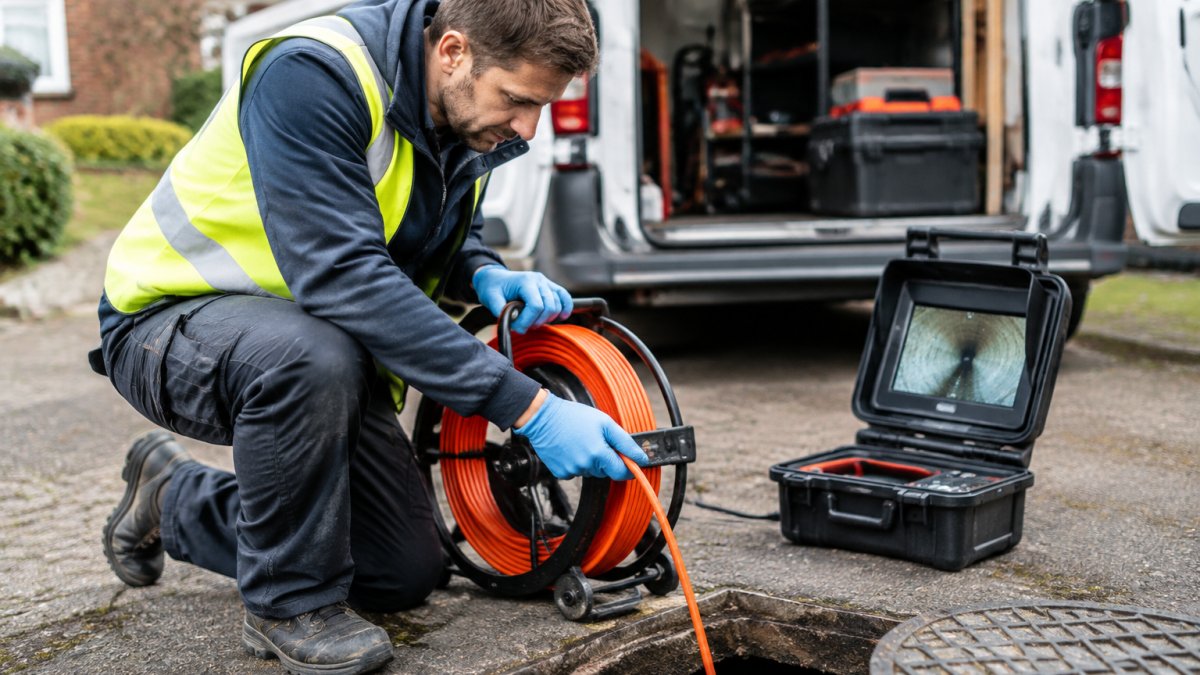
Before any repair method is chosen, the blockage or fault should be confirmed. A CCTV survey shows where the pipe is cracked, displaced or holding debris, and it gives you a recorded image to hold the contractor to. Without evidence, a repair may address the wrong section of the network.

Ask whether the survey footage will be supplied to you. Footage is useful for landlords, insurers and any future dispute about the condition of the drainage.
Commercial Repair Methods and When Each Applies
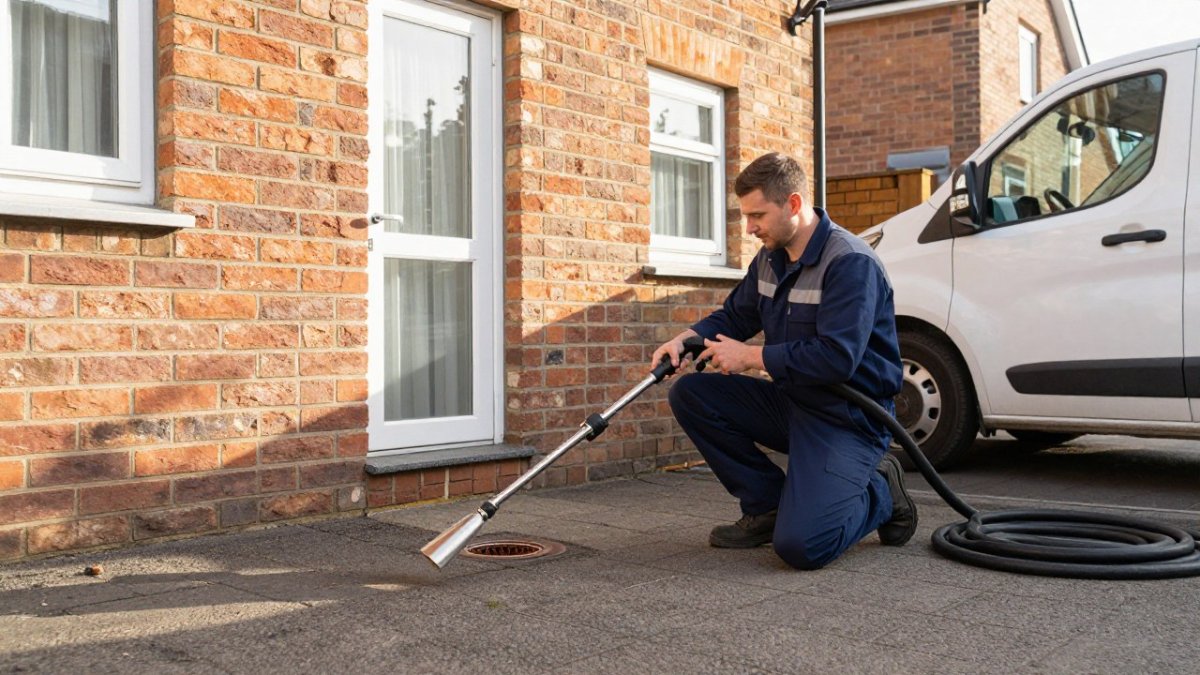
The right method depends on the fault. High-pressure jetting clears grease, sludge and root build-up without digging. It suits many commercial blockages but will not repair a collapsed or cracked pipe. Localised excavation is needed where the damage is structural. Lining or relining can restore a failing run with minimal digging, though it is not suitable for every pipe condition.
A good quote explains why its chosen method fits your fault, and what would make it unsuitable. Be cautious of any contractor who recommends the same method for every problem.
Understanding Drain Repair Cost and Hidden Extras
The total cost of a drain repair is more than the headline figure. Hidden extras often appear as access charges, after-hours surcharges, disposal fees, reinstatement of surfaces after excavation, or a separate charge for the survey. Our guide to avoiding hidden costs in drainage repairs shows how to spot them early. Before accepting a quote, ask the contractor to confirm in writing whether the price is fixed or an estimate, and what would trigger a variation.
BrightFlow Limited offers upfront, honest rates with no hidden surprises, so you can check each line of a quote against what you were charged. Browse the commercial drainage PPM, CCTV and jetting services available for facilities and businesses. Whatever provider you choose, insist that any change to the price is agreed before the work proceeds.
Emergency Commercial Drain Repair: Response and Availability
Some commercial drainage faults cannot wait. A grease trap that backs up during service, or a sewage backup into a ground-floor kitchen, needs a fast response. BrightFlow Limited provides 24/7 emergency response across Essex and East London, so a site that trades late or early can still get help when a fault strikes. See how emergency drain unblocking in Essex works for blocked toilets, sinks and sewage backups.
Check three things before you rely on any emergency cover: the response window they quote, whether the call-out is charged at a different rate, and whether the same team will attend the follow-up repair.
Booking Your Commercial Drainage Assessment With BrightFlow
If you manage a commercial site and want a structured assessment rather than a one-off fix, BrightFlow Limited can plan preventative maintenance for your premises. Customised maintenance plans are offered for residential and commercial clients.
To request a quote, contact BrightFlow Limited with your site details and the symptoms you have observed.
Frequently Asked Questions
What information should I provide when requesting a commercial drain repair quote?
Give the contractor the building address, the type of premises, and a clear description of the problem, including where and when blockages or smells occur. Note any previous repairs, drain layout drawings if you have them, and access restrictions such as opening hours or tenant areas. Mention whether the work is urgent. The more detail you provide, the more accurate the quote will be, and it reduces the chance of extras being added later. Ask for a written estimate that lists each stage of the work separately.
What extra costs should I check for in a drain repair quote?
Check whether the quote includes survey and diagnostic time, access equipment, excavation or reinstatement of surfaces, disposal of waste, and any follow-up CCTV confirmation. Ask whether call-out charges apply outside standard hours and whether VAT is included in the figure shown. Confirm what happens if the survey reveals a larger fault than expected, and whether the contractor will stop and seek your approval before carrying out additional work. A fixed price for defined work, with a clear process for variations, is the safest basis for comparison.
What should I ask before approving commercial drain work?
Ask what evidence supports the diagnosis, whether a CCTV survey has been carried out, and what repair method is proposed and why. Check the contractor's insurance and accreditation, and ask who will be on site and how long the work should take. Request confirmation of the warranty or follow-up policy for the repair. Finally, ask how the work will be documented, so you have records of the survey footage and the completed repair for your building maintenance file.

Comments