Commercial Drainage Asset Management Strategies That Work

Last Updated: November 12, 2026
Quick Summary
Commercial drainage asset management means treating every drain, manhole, gully and pipe on a site as a managed asset rather than a problem to fix when it breaks. A proper strategy cuts emergency call-outs, extends asset life and gives you cleaner evidence for budgets, insurers and landlords.
Build a drainage asset register recording type, location, condition grade and maintenance history for every asset.
Rank assets by combining likelihood of failure with the consequence if they fail.
Set maintenance frequency by risk band, not habit, and spread bands across the year.
Clear surface-water assets before autumn leaf fall and again in early spring.
Compare whole-life costs against the cost of doing nothing when building the business case.
Still fighting the same blockage every year?
BrightFlow Limited builds planned drainage maintenance and CCTV surveys for commercial sites across Essex and East London.
Table of Contents
Why Commercial Drainage Asset Management Pays for Itself
Commercial drainage asset management is the practice of treating every drain, manhole, gully and pipe on a site as a managed asset rather than a problem to fix when it breaks. A site with a proper strategy spends less on emergencies and gets more years out of its network. A site without one pays for the same blockage twice a year and calls it bad luck.
The financial case is straightforward. Reactive work costs more per visit than planned work. It also arrives at the worst possible moment, often out of hours, often with a business closed or a car park flooded. Planned maintenance spreads cost across the year and keeps the network working.
Three things drive the return:
Fewer emergency call-outs, because problems are found before they block
Longer asset life, because small defects are fixed before they spread
Cleaner evidence for budgets, insurers and landlords
The rest of this guide sets out how to build that strategy from scratch, in order.
Building Your Drainage Asset Register Template
A drainage asset register is a single record of every drainage asset on your site, where it is, what condition it is in and when it was last touched. Without one, maintenance decisions rest on memory and guesswork.
Start with a walkover. Mark every manhole, gully, rodding eye, grease trap, pump chamber and soakaway on a site plan. Then capture the same fields for each one, so the data stays comparable:
Field | What to record |
Asset ID | Unique reference, tied to the site plan |
Type | Gully, manhole, pipe run, pump, trap |
Location | Building, bay, or grid reference |
Material and diameter | Concrete, clay, plastic; pipe size in millimetres |
Condition grade | 1 to 5, where 5 is collapsed |
Last inspection | Date and method used |
Maintenance history | Jetting, CCTV, repairs, dates |
A spreadsheet works for a small site. For anything larger, a GIS mapping layer or a mobile data collection app pays for itself quickly, because engineers record findings on site and the register updates itself. The Environment Agency's guidance on drainage and water management is a useful reference for how drainage data feeds into wider environmental responsibilities.
The register is only as good as its data accuracy. Build in a review each year and check that every asset on the plan still exists.
Condition Assessment and Risk Ranking Across the Drainage Network
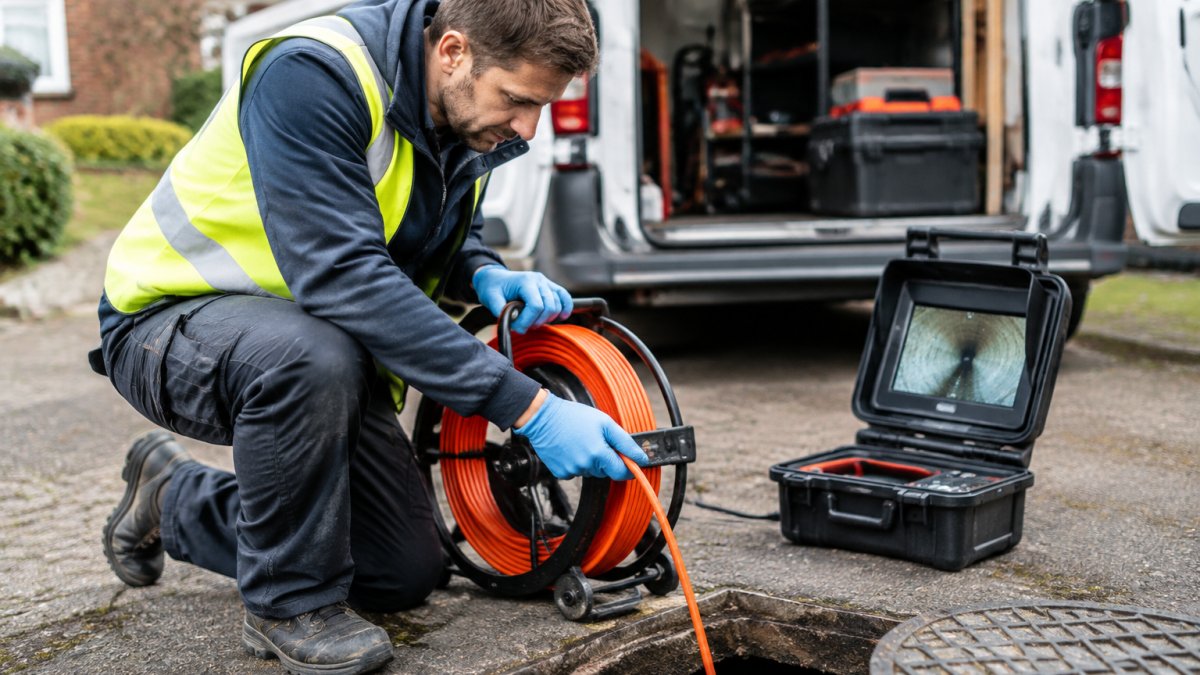
Condition assessment turns a list of assets into a ranked action plan. A common method is a CCTV drainage survey, where a crawler camera travels the pipe and records defects such as cracks, root ingress, displacement, debris and loss of shape.

Once you have condition grades, add a risk layer. Risk combines the likelihood of failure with the consequence if it fails. A collapsed pipe under a loading bay is a far bigger problem than the same pipe under a quiet verge.
The ranking drives everything that follows. High-risk, poor-condition assets get attention first. For pricing on a CCTV drainage survey, visit the BrightFlow Limited website or request a quote, so the assessment can be built into the annual budget.
Your Commercial Drain Inspection Checklist
A commercial drain inspection checklist keeps inspections consistent, so results from one visit can be compared with the next. Use the same list every time:
Check every gully for silt, leaves and debris
Lift each manhole cover and check flow level and speed
Look for signs of surcharge, staining or roots at joints
Confirm grease traps are emptying and baffles are intact
Test pump chambers and check float switches
Record flow direction and confirm it matches the site plan
Note any new cracks, displacement or odour
Photograph defects and attach them to the asset record
Flag any asset that needs a CCTV survey
Update the register with date, findings and actions
The last two items matter most. An inspection that is not written down did not happen, as far as the next engineer or the budget holder is concerned.
Creating a Commercial Drain Maintenance Schedule
A commercial drain maintenance schedule sets out what gets done, how often, by whom and to what standard. Frequency should follow risk, not habit.
The practical way to build the schedule is to work from the risk ranking in the previous section and assign each asset a maintenance band. A workable pattern for many commercial sites looks like this:
Band 1 (high risk, poor condition): monthly gully clearing and grease trap checks on food premises, quarterly jetting of high-use runs, pump testing every quarter, and CCTV re-survey every 12 to 24 months
Band 2 (medium risk): six-monthly gully clearing, annual jetting of main runs, annual pump and float-switch testing
Band 3 (low risk, good condition): annual inspection and register review, with CCTV survey every three to five years or after any reported defect
As needed: reactive attendance for blockages, logged against the asset record and reviewed at the next schedule cycle
Two operational details decide whether the schedule survives contact with a real site. The first is access. Tankers and jetting units need hard standing, a safe approach and somewhere to discharge waste.
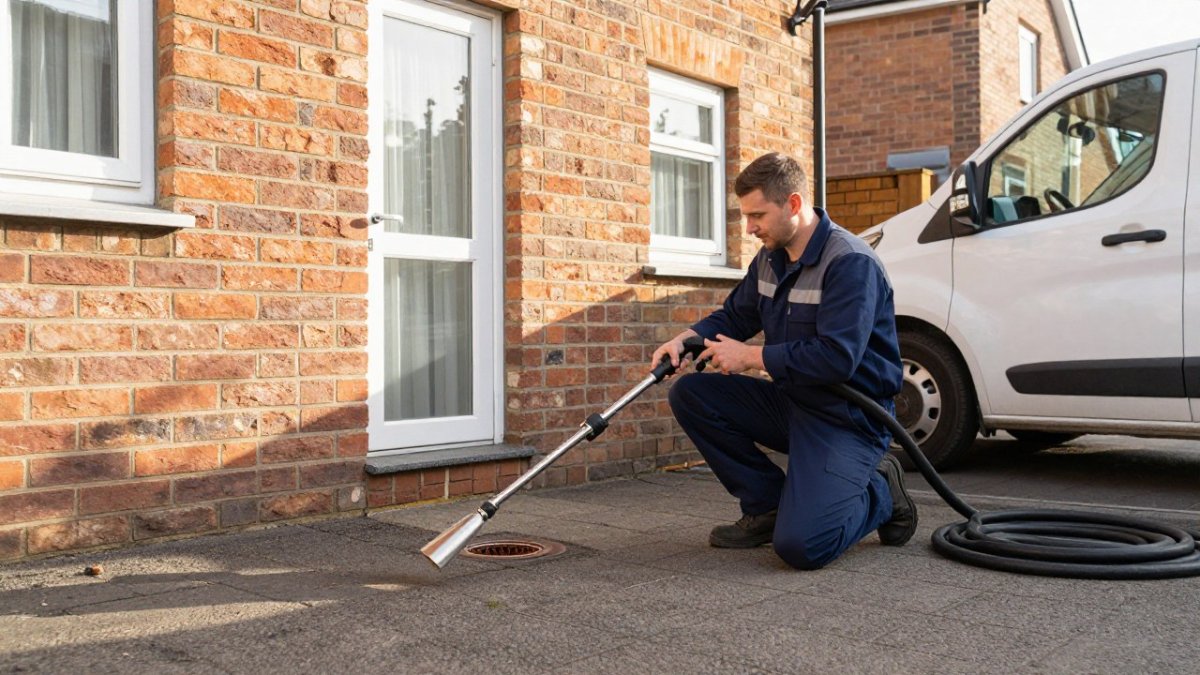
The second is seasonal timing. Gully and surface-water assets are generally worth clearing before the autumn leaf fall and again in early spring, when silt and debris load tends to peak.
Put the schedule in a shared calendar and assign a named owner for each band. Then measure it. A simple monthly report covering four measures is enough to show whether the schedule is working:
Measure | What it tells you |
Inspection completion rate | Whether planned visits actually happened |
Defect closure time | How quickly identified defects are fixed |
Blockage frequency per asset | Which runs are repeat offenders |
Planned versus reactive spend | Whether the strategy is shifting cost out of emergencies |
Watch out: a common mistake is scheduling everything for the same month. That overloads the budget, strains contractor availability and leaves the network unmonitored for the other eleven months. Spread the bands across the year and protect the pre-winter surface-water visits first.
If you want a deeper structure to build from, our guide to commercial drainage maintenance plans sets out how to phase work across the year.
Drainage Maintenance Best Practices for Commercial Sites
Good practice comes down to a few habits applied consistently. Keep fat, oil and grease out of the network at source, because grease is the single biggest cause of repeat blockages on food premises. Fit and maintain traps, and empty them before they overflow, not after.
Keep a log of every visit, including the ones that found nothing. A clean inspection record is evidence that you are managing the asset, which matters when a landlord, insurer or buyer asks.
Train staff to report slow drains early. A drain that is draining slowly is telling you something. A drain that has stopped is an emergency.
For food businesses, our preventative drainage maintenance guide for restaurants covers the sector-specific routines in more detail.
Whole-Life Costing and the Business Case for Investment
Whole-life costing compares the total cost of an asset over its remaining life, not just the cost of the next repair.
Build the comparison on four cost lines rather than three. The first is current annual reactive spend, including out-of-hours premiums, emergency attendance, make-good works and any business interruption cost such as a closed car park or a suspended loading bay. The second is the estimated cost of planned work to address the top-ranked risks, priced per asset from the register. The third is the expected reduction in reactive spend and the extended asset life, expressed as years added before renewal. The fourth, and the one most business cases miss, is the cost of doing nothing: the likelihood and consequence of a failure on each high-risk asset, priced as a risk exposure rather than a certainty.
Present the case as a comparison, not a request. Decision-makers approve budgets when they can see that the alternative costs more.
Cost drivers vary by asset type, and it helps to know which ones dominate. For pipework, the main drivers are access, depth, the length of the run and whether the repair can be done by lining rather than excavation.
Climate resilience belongs in the same calculation. Changing rainfall intensity is increasing the load on surface-water and combined systems, and a network designed for a lower return period may now surcharge more often.
Before you commit to any repair, it is worth knowing what to check before accepting a commercial drain repair quote, so the numbers you present stand up to scrutiny.
Commissioning a Drainage Asset Management Plan for Your Site
An asset management plan pulls the register, condition data, risk ranking, schedule and budget into one document with clear objectives and service levels. It states what the site needs, what it will cost and how performance will be measured.
Commissioning one is straightforward if you have done the groundwork above. If you would rather hand it to a specialist, we provide commercial drainage PPM, CCTV inspections and planned maintenance for facilities, landlords and businesses across the region.
Our team is SafeContractor accredited, uses high-definition CCTV and advanced hydro-jetting, and offers customised maintenance plans for residential and commercial clients. To talk through your network and get a plan in place, request a quote.
The real test of a drainage strategy is what happens in the second year. Networks that are mapped, graded and scheduled stop producing surprises. If your site is still firefighting blockages, the fix is a proper plan built on real data.
Frequently Asked Questions
What is drainage asset management?
Drainage asset management is the process of recording, inspecting, maintaining and planning investment in every drain, manhole, gully, pump and attenuation tank on a site. It replaces reactive call-outs with a planned cycle of condition checks and risk-based decisions. For commercial sites, a working drainage asset management plan typically covers an asset register, inspection intervals, maintenance schedules and a budget forecast for renewal. The aim is to keep surface water and sewage infrastructure flowing, reduce emergency costs and provide evidence that compliance responsibilities are being met.
How often should commercial drains be inspected?
Most commercial sites should have a full CCTV drainage survey every 12 to 24 months, with interim visual checks every three to six months. High-risk assets need more frequent attention: grease traps at restaurants should be checked quarterly, and surface water gullies in car parks before and after autumn leaf fall. Your commercial drain inspection checklist should set different intervals by asset criticality rather than applying one rule to the whole network. Sites with a history of repeat blockages may need six-monthly surveys until the cause is resolved.
What records should a drainage asset register contain?
A drainage asset register template should hold a unique ID for each asset, its type (manhole, gully, pipe run, pump, separator), location with GIS mapping coordinates, dimensions and material, invert levels, condition grade, criticality rating, inspection dates and any defects found. Add maintenance history, renewal cost estimates and ownership or adoption status. Accurate asset data is what makes traceable decisions possible, so record who inspected the asset and when. Without this, maintenance planning becomes guesswork and capital investment is hard to justify.
How can planned maintenance reduce drainage failures?
Planned maintenance removes the causes of failure before they become emergencies. Scheduled jetting clears silt and fat before pipes lose capacity, CCTV surveys catch root ingress and joint displacement early, and gully emptying prevents surface water flooding in winter. The result is fewer reactive call-outs, longer asset life and predictable operational expenditure. Set service levels for response times, track blockage frequency per asset and review the commercial drain maintenance schedule annually. Sites that follow drainage maintenance best practices consistently spend less on emergency repairs over a five-year cycle.

Comments