How Do You Prepare for a Home Drainage Inspection?

Last Updated: November 16, 2026
Quick Summary
To prepare for a drainage inspection, locate every drain cover and inspection chamber, clear a safe path to each one, and send any previous reports or drawings to the surveyor beforehand. Confirm which drains are public and which are private, and do not pour chemicals into the drains before the visit.
Send previous drainage reports, CCTV footage, plans or builder's drawings to the surveyor before the visit.
Locate every drain cover, manhole and inspection chamber the day before, and clear a path to each one.
Confirm with your solicitor which drains are public sewers and which belong to the property.
Do not pour drain cleaner, chemicals or high-pressure water into the drains before the inspection.
Never lift heavy or unstable covers or enter a chamber yourself; leave access to the engineer.
Table of Contents
Why a Home Drainage Inspection Is Worth Preparing For
A home drainage inspection shows what is happening beneath your property before a small fault becomes a costly repair. Homeowners who prepare properly tend to get clearer results and fewer surprises on the day. Knowing how to prepare for a home drainage inspection saves time for you and the engineer.
Most drainage faults stay hidden until they cause a problem. A drain survey uses a small camera fed through the pipe to record its condition, showing blockages, cracks, displaced joints and root ingress. Our guide to the signs of a collapsed drain pipe to check for now explains what to look for before a survey.
Preparation matters because the camera can only inspect what it can reach. Blocked access, unclear drain covers or a missing layout drawing can turn a short visit into a partial survey. A little planning removes most of these problems.
When to Arrange a Drain Survey During a House Purchase
Many buyers arrange a drain survey during the conveyancing stage, after an offer is accepted but before exchange of contracts.
Where a property has a private septic tank or shared drainage, a survey is especially useful. Ask your solicitor which drains are public sewers and which belong to the property, as ownership affects who pays for repairs.
Book the survey soon after your offer is accepted
Confirm the property address and access details in advance
Ask the seller about known blockages or past repairs
Drain Survey Checklist for Homeowners
A useful checklist is not just a list of jobs, it is a timeline. Most drainage engineers will confirm the appointment and access requirements in writing beforehand, so use the days before the visit to work through the items below in order. That way nothing is left to the morning of the survey, when the engineer is already at the door.

One week before the visit
Confirm the property address, the reason for the survey and who will be present on the day
Tell the surveyor about any known problems, slow-draining sinks, gurgling plugholes, smells, damp patches or past repairs, so they can plan which runs to inspect first
Gather any previous drainage reports, CCTV footage, plans or builder's drawings and send copies ahead of the visit
Check with your solicitor or the seller which drains are public sewers and which are private, especially if the property has a septic tank or shared system
Ask about parking and whether the engineer will need a permit or a space cleared on the drive
The day before
Locate every drain cover, manhole and inspection chamber and note roughly where each one sits
Clear a path to each access point, move bins, planters, garden furniture and vehicles
Trim back overgrown plants and clear loose stones so the cover can be lifted safely
Confirm keys or gate codes and make sure the route to the garden or rear access is unlocked
Arrange for pets to be kept indoors or away from the work area, and for children to be supervised
On the day
Have the contact number for the surveyor to hand in case access changes
Point out any covers you could not find or that appear stuck, paved over or damaged
Keep the area around each chamber clear while the engineer works
Ask for a verbal summary of the main findings before the engineer leaves
If you cannot find a cover, say so in advance so the engineer can plan access.
Watch out: do not lift heavy, rusted or unstable covers yourself, and never enter a chamber or pit. If a cover is stuck, paved over or looks unsafe, leave it for the engineer and mention it when you confirm the booking.
The checklist breaks down into timed stages, so the main steps can be scanned at a glance.
Stage | What to do | When |
Confirm details | Confirm the address, reason for survey and who will be present | One week before |
Share history | Send previous reports, CCTV footage, plans or drawings | One week before |
Check ownership | Confirm which drains are public sewers and which are private | One week before |
Clear access | Locate covers, clear a path and trim back plants | The day before |
Prepare entry | Confirm keys or gate codes and keep pets and children away | The day before |
Point out covers | Flag any covers you could not find or that look stuck | On the day |
Get a summary | Ask for a verbal summary of the main findings | On the day |
CCTV Drain Survey Process: What Happens on the Day
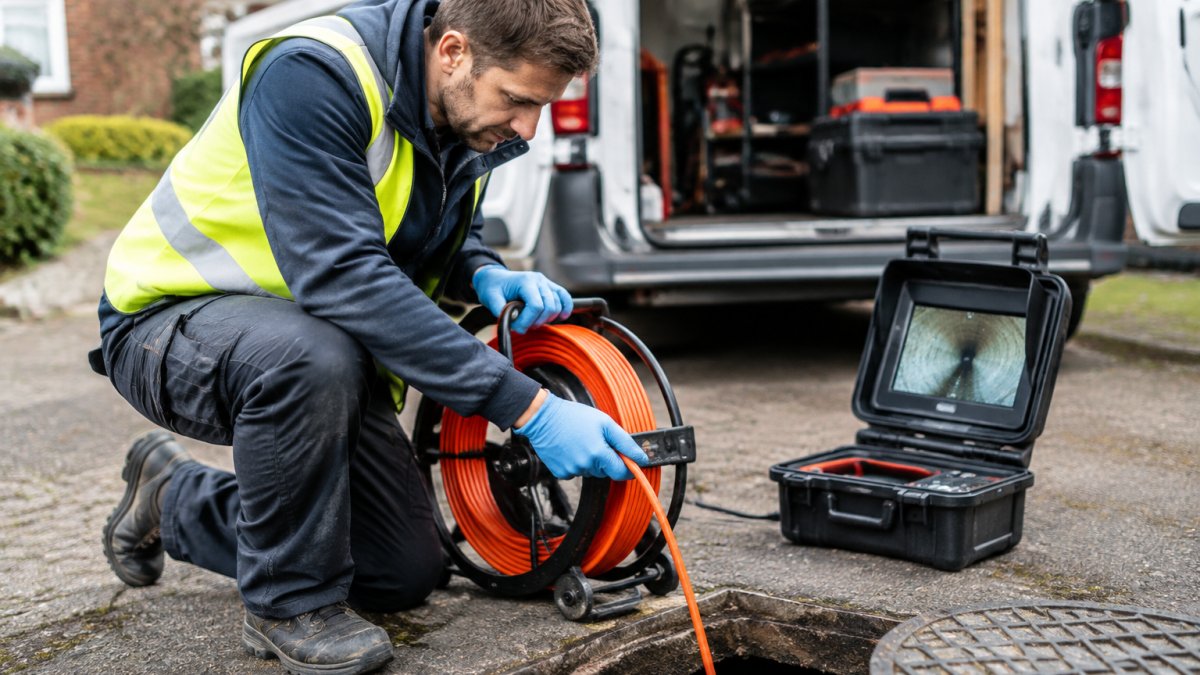
A CCTV drain survey uses a camera on a flexible cable that the engineer feeds through the pipe. The camera records footage and a monitor shows the live view. The engineer will usually flush the pipe first so the camera can see clearly.
You can often watch the footage with the engineer. Ask them to point out any cracks, dips or debris as they appear. Finish the visit with a clear summary of the main findings.
How Long Does a Drain Survey Take?
The length of a drain survey depends on the size of the property, the number of runs to inspect and how much cleaning is needed first.
Allow extra time if access is difficult or if several chambers need opening. The total time also depends on how many pipes need checking and how much debris is in them.
Brentwood Property Considerations and Safety Precautions
Drainage layouts vary between properties, and in older homes inspection chambers may sit under a patio, a block-paved drive or a layer of turf. It is worth checking with your solicitor which runs a survey should cover.
Finding chambers around common Brentwood property features
Look along the rear wall of the house, near the kitchen and bathroom, where the main soil run usually leaves the building
Check the boundary line between your garden and a neighbour's, where shared drains often have a chamber
Look for a slight dip or a square outline in block paving, decking or gravel, covers are sometimes set flush and hidden by the surface
Check any extension, conservatory or outbuilding, as drainage may have been diverted around it
If a cover is paved over, decked over or cannot be found, do not break the surface to reach it. Tell the surveyor in advance so they can advise on next steps. If a chamber is inaccessible, the survey may be partly limited, so ask how any limitation will be explained before you book.
Private systems and ownership questions
Some Brentwood properties, particularly older or rural-edge homes, use a septic tank or a private treatment system rather than mains drainage. Ask your solicitor which system the property uses and who owns and maintains it. This affects what the survey should cover and who is responsible for repairs. It does not mean a survey is legally required, it is a practical step to understand the system before you commit.
Safety: what homeowners should not do
Drainage chambers can be deep, and covers can be heavy, rusted or unstable. The safest approach is to leave all lifting and entry to the engineer.
Do not lift heavy or unstable covers yourself
Do not climb into a chamber or pit, even if it looks shallow
Do not pour chemicals, drain cleaner or high-pressure water into the drains before the inspection, as this can mask defects or damage the pipe
Do not use a pressure washer on the drains in the days before the visit
Keep children and pets well back from open chambers and equipment
Watch out: if you notice a strong smell, a collapsed cover or standing sewage before the visit, keep clear and tell the surveyor when you book, they may need to treat it as an urgent call-out rather than a routine survey.
Questions to Ask a Drainage Engineer Before You Book
Before you book, ask these questions:
Is the engineer qualified and insured to carry out CCTV surveys?
What does the report include, and how soon will I receive it?
Will the survey cover the whole drainage network or only the main runs?
What happens if the camera cannot pass a blockage?
What is the total cost, and are there any extra charges?
Booking Your Drainage Inspection With BrightFlow
Preparation makes a drainage inspection faster and more useful. At BrightFlow Limited, we offer CCTV surveys and hydro-jetting, with upfront, honest rates. We are SafeContractor accredited and fully insured.
If a problem is already showing, our emergency drain unblocking Essex team is available 24/7. For homes across Essex and East London, our domestic drainage service is available. To learn what a survey costs before you book, read our guide to how much a drainage CCTV survey costs in 2026. Before choosing an engineer, our guide to vetting drainage engineers and safety checks explains what to look for.
Request a quote today and we will confirm your survey date, access requirements and full price in writing.
Frequently Asked Questions
How do I prepare my home for a drain survey?
Clear the route to every drain cover, manhole and inspection chamber so the engineer can reach them without moving heavy items. Trim back plants, lift garden furniture and note where each access point sits. Tell the engineer about any water-using appliances that should be switched off during the survey. Keep a copy of your property plan or any previous drainage records to hand, and make sure the surveyor knows which drains serve the property and which belong to the water company. Clear preparation reduces the number of return visits and gives you a fuller report.
Do I need to clear anything before a CCTV drain inspection?
Yes. Remove obstacles such as garden furniture, pots, sheds and vehicles from above the access points. Make sure the drain covers are not sealed by paint or soil, and that the engineer can open them safely. Avoid running water in the property during the survey unless the engineer asks you to, because it can make the camera footage harder to read. If you are unsure which covers are relevant, ask your surveyor to confirm the locations before the visit.
How long does a home drain survey take?
The time depends on the size of the drainage network, the number of access points and how easily they can be reached. The time on site depends on the size of the drainage network and how easily the access points can be reached. Good preparation, with clear access and known drain locations, is the most reliable way to keep the appointment short.
What should I ask a drainage engineer before a survey?
Ask what the survey will cover, whether it includes a CCTV camera inspection, and what the report will contain. Confirm the price in writing before the visit, including whether any additional work could be charged. Ask how the engineer will explain access limitations, and whether they can provide photographs and footage with the report. Check their accreditations and insurance, and ask what happens if a defect needs further investigation.

Comments