Drainage Repair Permits and Regulations: What You Need to Know

Last Updated: November 11, 2026
Quick Summary
Most drainage repair work needs no permit if it is a like-for-like fix, but you need building regulations approval when the layout, connections or discharge point changes, and water company permission before working on or near a public sewer. Always confirm ownership first, because private drains and lateral drains are usually your responsibility.
A private drain serves one property and a lateral drain runs from your boundary to the public sewer.
Part H approval is generally needed when work changes capacity, route, discharge destination or access.
Request the sewer map and a CCTV survey before designing any work near a public sewer.
Off-mains systems discharging to a watercourse or ground must meet the general binding rules.
Emergency make-safe work can start immediately but document it and apply for approval afterwards.
Not sure if your drain repair needs approval?
BrightFlow Limited diagnoses drainage faults and explains which permissions your repair needs.
Table of Contents
Who Owns Which Pipe: Private Drains, Lateral Drains and Public Sewers
Most drainage repair disputes come down to a single question: whose pipe is it? In this guide, BrightFlow Limited sets out how drainage repair permits and regulations work, because the answer decides who pays, who approves the work and which rules apply.
The distinction matters because a blockage in a private drain is your responsibility, while a collapsed public sewer is not.
The property boundary rule that decides who pays
The boundary rule is straightforward in principle: whatever runs beneath your land before it reaches the sewer connection is usually yours to maintain.
That includes pipes serving only your property and, where the connection was made after the relevant transfer date, the lateral drain beyond the boundary. Many older properties have different arrangements, and the only reliable way to confirm ownership is to check with the water company and, where needed, request a copy of the sewer map.
Water UK guidance on drain and sewer ownership
Drain and Sewer Repair Responsibility: Who Pays for What
Responsibility splits into three layers, and knowing which layer you are in prevents expensive mistakes.
Inside the boundary: the property owner pays for unblocking, repair and replacement of private drains.
The lateral drain: often the property owner's responsibility, even though it lies outside the boundary.
The public sewer: the water company pays, and you must not work on it without permission.
For landlords and managing agents, this is where costs get disputed. A common mistake is assuming the water company will attend a blockage that is actually within the boundary, which delays the repair and can cause further damage.
Once you know who is responsible, the next step is checking a repair quote against the right criteria before accepting it. Our guide to what to check before accepting a commercial drain repair quote sets out the questions worth asking.
Drainage Building Regulations Part H: What the Rules Actually Require
Part H of the Building Regulations covers drainage and waste disposal (Drainage and waste disposal: Approved Document H). It applies to new drainage, replacement of below-ground drainage, alterations, and in some cases repairs that change how the system performs. Compliance is judged on outcomes: adequate capacity, resistance to leakage, durable materials, accessible inspection points and correct connection to the public sewer.
The core requirements are practical:
Drainage must be adequate for the property's use and carry waste without leakage.
Materials and construction must resist damage and last.
Access points must allow inspection and maintenance, typically rodding eyes, inspection chambers and access fittings at changes of direction.
Connections to public sewers must follow the correct procedure, including notification to the sewerage undertaker where required.
Ventilation must prevent the build-up of foul air and protect trap seals.
When a repair needs building regulations approval
A straight like-for-like repair, such as replacing a cracked section of pipe in the same position, usually does not need approval. Work that changes the drainage layout, adds a new connection, replaces a septic tank or alters a discharge point generally does.
The practical test most building control teams apply is whether the work affects the system's capacity, route, discharge destination or access arrangements. If it does, assume approval is needed until told otherwise.
How to apply and what to submit
Applications go to your local authority building control team before work starts.
Fees vary by local authority and by the value and complexity of the work, so confirm current charges directly.
Watch out: starting work before approval is granted can lead to enforcement action and may complicate a future sale, even where the completed work is technically compliant.
Competent person routes and self-certification
Some drainage work can be self-certified by a registered competent person scheme rather than through a separate building control application (Competent person schemes). This is most common for certain plumbing and heating work, but not all drainage alterations qualify. Confirm with the contractor whether their scheme registration covers the specific work, and obtain the compliance certificate, it is the document a buyer's solicitor will ask for.
Differences across the four nations
The Building Regulations framework differs by jurisdiction, so the application route, the forms and the inspection regime are not identical. Confirm the process with the relevant local authority before assuming an England-style application applies.
Hidden costs in the repair itself are a separate risk, and our guide to avoiding hidden costs in drainage repairs explains where they tend to appear.
Public Sewer Repair Permission: Working Near or Over a Water Company Asset
You cannot build over or work close to a public sewer without permission from the sewer owner. This is one of the most commonly missed requirements in drainage repair permits and regulations, and it is enforced.

Step one: establish what is actually there
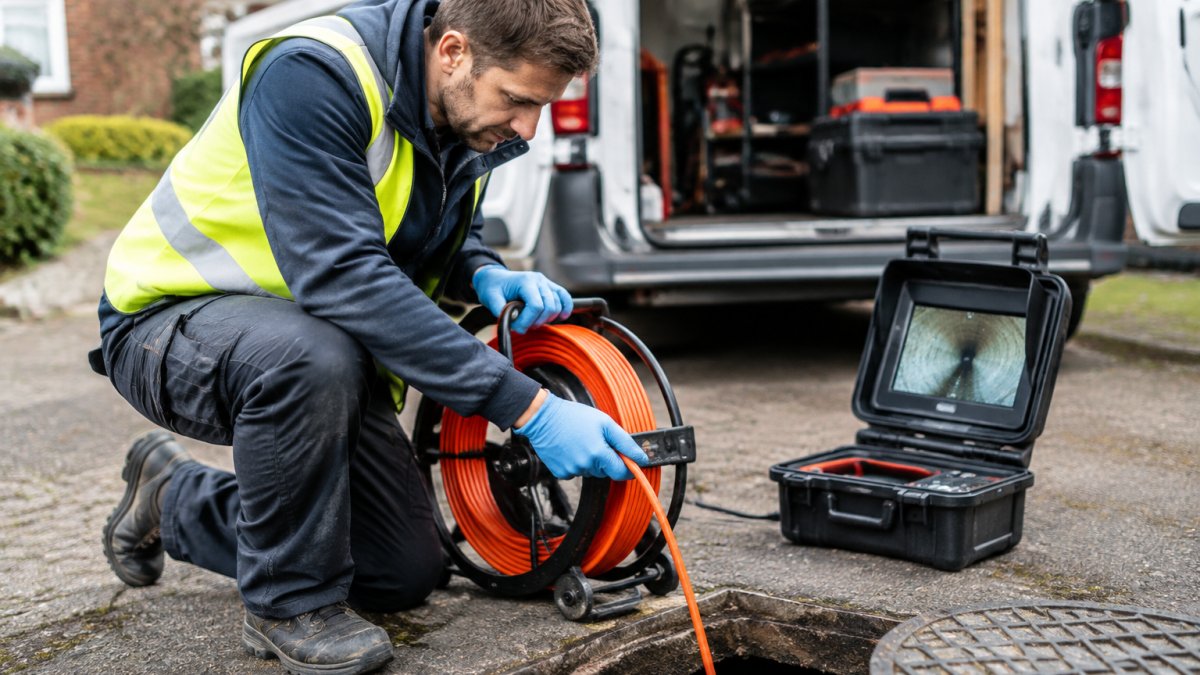
Request the sewer map from the water company to confirm the asset's position, size, depth and ownership status. The map is not always definitive, records can be incomplete or inaccurate, particularly for older estates, so a CCTV survey and trial hole are often needed to confirm the real alignment before design work begins. Do this early: a sewer found in the wrong place after foundations are set is an expensive discovery.
Step two: the build-over application
The application typically requires scaled drawings showing the sewer's position relative to the proposed structure, foundation design details, the method of construction and how safe access for maintenance will be preserved. Water companies generally apply standard requirements: foundations may need to be taken below the sewer invert or designed to avoid loading the pipe, and a clear zone may be required either side of the sewer.
Step three: fees, timescales and conditions
Application fees are set by each water company and vary with the type of agreement and the complexity of the work, so confirm current charges directly.
Watch out: proceeding without consent can lead to the water company requiring the structure to be altered or removed at your cost, and it can surface as a defect during a property sale.
Working near, not over, a public sewer
Permission is not limited to building directly over a sewer. Work that could affect the sewer's integrity, deep excavations, piling, heavy plant tracking close to the line, or new foundations within the company's protection zone, may also require consent or an asset protection agreement. The safe approach is to treat any work within the protection distance as notifiable and to ask the company before mobilising.
Connections and diversions
A new connection to a public sewer requires an application to the sewerage undertaker, and the work is often carried out by an approved contractor under the company's specification. Where a sewer must be diverted to accommodate development, a diversion agreement is needed, and the company will set the design and construction requirements.
If work has already been done without consent
The route to regularise is to contact the water company, explain what was built and when, and apply for retrospective approval. The company may require opening-up works, CCTV evidence or structural calculations, and it can refuse consent or impose remedial conditions. Resolving it before a sale is almost always cheaper than resolving it during one.
Environmental Permits for Drainage Work: Septic Tanks, Treatment Plants and Discharge
Properties not connected to the public sewer need environmental permission for discharge. Septic tanks and small sewage treatment plants that discharge to a watercourse or to ground are regulated, and the general binding rules set out what is permitted without a bespoke permit.
The practical points owners most often miss:
Discharge to surface water requires a higher standard of treatment than discharge to ground.
A drainage field must sit at the correct distance from water sources and boundaries.
Older systems may no longer meet the general binding rules and need upgrading.
Where a system does not meet the rules, the regulator can require remedial work. Confirm the current position with the environmental regulator before commissioning any replacement.
A Practical Decision Tree for Permits and Approvals
Use this sequence to decide what your job actually needs before you instruct anyone.
Step | Question | If yes | If no |
1 | Is the work on a public sewer? | Water company permission required | Continue |
2 | Does it change layout, connections or discharge? | Building regulations approval likely | Continue |
3 | Is the property off mains drainage? | Check environmental permitting rules | Continue |
4 | Is it a like-for-like repair? | Proceed with competent contractor | Review step 2 |
Work through it in order. Most delays come from skipping step one.
Emergency repairs and work that can start before approval
Genuine emergencies, such as a sewage back-up into a property or a collapse threatening a structure, can justify immediate make-safe work. Document what you did, why, and keep photographs, then apply for approval retrospectively where the permanent repair needs it.
For a fast response, our emergency drain unblocking service across Essex and East London is available around the clock.
Consequences of non-compliance and how to regularise unauthorised work
Unauthorised work can be enforced against, and it surfaces at the worst moment: when you sell. Regularising usually means an application to building control, possibly opening up the work for inspection, and paying fees. Before you book anyone for remedial work, check their guarantee and follow-up policy.
Requesting a Drainage Repair Quote
A good quote starts with diagnosis, not a price. Ask for a CCTV survey where the cause is unclear, a written scope, and confirmation of which approvals the contractor will handle.
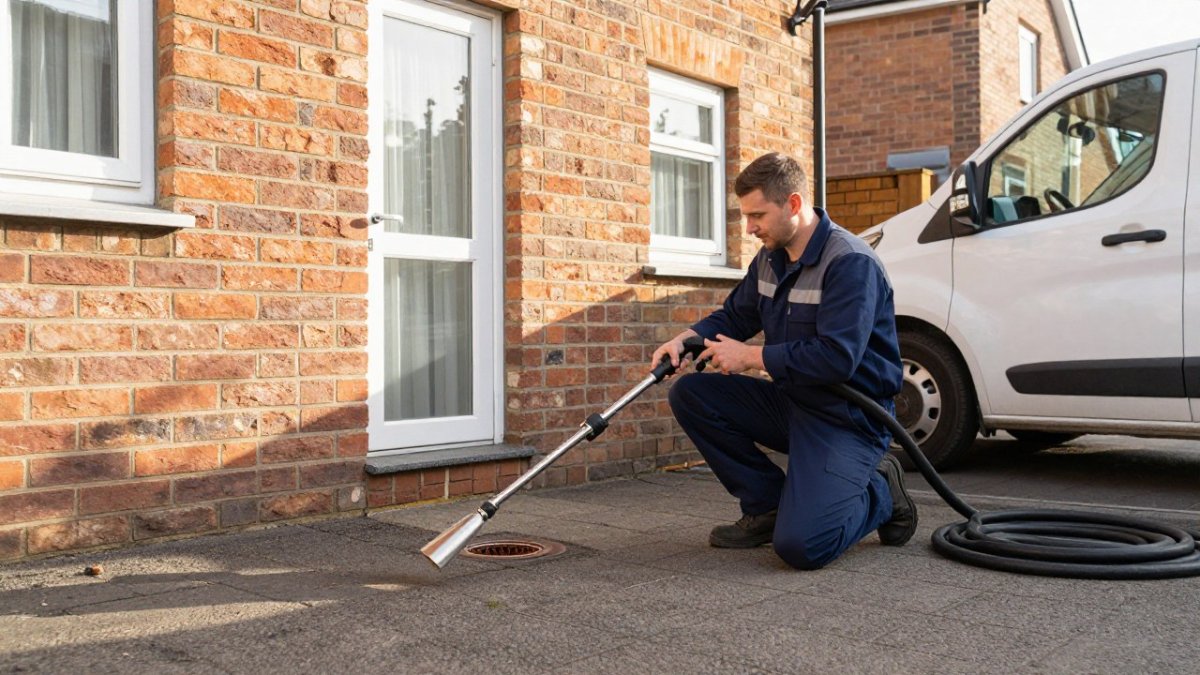
At BrightFlow Limited, we provide accurate diagnostics using high-definition CCTV and hydro-jetting, upfront rates with no hidden surprises, and SafeContractor accreditation, all backed by 24/7 emergency response. For domestic work, you can request a quote for drainage and plumbing directly.
The riskiest part of any drainage job is the gap between what you can see and what is actually happening underground. Guessing at that gap is how repairs get repeated.
Frequently Asked Questions
Do I need building regulations approval to repair a drain?
Usually not for a like-for-like repair. Replacing a cracked section of pipe with the same material and diameter is generally classed as maintenance, not building work, so it falls outside the approval process. Approval becomes relevant when you install a new drainage system, alter an existing one, or replace a drain with a different layout or capacity. Part H sets the standards, and your local authority building control team can confirm whether your specific job needs a submission before work begins.
Do I need permission to repair a public sewer?
Yes. A public sewer is owned by the water company, and any work affecting it needs their permission, often called a permit to work. That covers connecting to it, building over or within a set distance of it, and altering it in any way. You should never break ground near a public sewer without written approval. The water company will set conditions on how the work is done, and may inspect before, during and after. Working without permission can lead to enforcement action and a requirement to undo the work.
Who is responsible for repairing a drain or sewer?
The property boundary decides it. A drain serving only your property is your responsibility up to the point it crosses the boundary. Once it crosses, it usually becomes a lateral drain and, in most cases, the water company's responsibility. A drain shared with neighbours is generally the water company's too, once it leaves a boundary. Inside the boundary, shared drains are usually the joint responsibility of the connected properties. Check with your water company before assuming, because the position varies.
When might environmental permitting rules apply to drainage work?
They apply when you discharge treated sewage to surface water or groundwater, rather than to a public sewer. Small sewage treatment plants and septic tanks discharging to a watercourse or soakaway fall under the environmental permitting regime and the binding rules. If you repair, replace or decommission one of these systems, or change where it discharges, you may need a permit or an exemption registration. The environmental regulator for your part of the UK can confirm which applies, and it is worth checking before you order any equipment.

Comments