Does Drainage Repair Insurance Cover Blocked Drains?

Last Updated: November 17, 2026
Quick Summary
Drainage repair insurance usually covers sudden, accidental damage to drains, but rarely routine blockages caused by grease, wear or tree roots. Cover depends on your policy wording, the excess and the cause of the fault, so check whether drainage is included in your home policy or sold as a separate add-on.
Standard buildings and contents policies often exclude slow drains caused by maintenance issues.
Many policies apply a separate annual limit to drainage work, so check whether it is per incident or per year.
Notify your insurer before instructing a contractor, because using an unapproved plumber can invalidate the claim.
A CCTV survey report is often the strongest evidence showing whether a fault is insured or excluded.
Keep a baseline inspection on file, since it shows what was working before the problem arose.
Is your drain covered if it fails?
BrightFlow Limited surveys and maintains drains across Essex and East London, with clear reports for your insurer.
Table of Contents
What Drainage Repair Insurance Covers in Practice
Drainage repair insurance is a cover that pays for repairs to the pipes, drains and sewers serving a property. Whether a blocked drain is covered depends on the policy wording, the excess and the cause of the fault.
Many homeowners assume drain problems fall under their home insurance automatically. Often they do not. Standard buildings and contents policies focus on structural damage from events such as fire, flood or storm.
Does home insurance cover drain repairs?
Some home insurance policies do cover drain repairs, but usually only when a sudden, accidental event causes the damage. Cover for the pipes and drains themselves is often an add-on or a separate plumbing and drainage policy. Read the schedule and the drainage section before you assume you are protected.
Plumbing and drainage cover versus buildings insurance
Buildings insurance protects the structure of the property, including walls, roof and fixed fittings. Plumbing and drainage cover, by contrast, focuses on the pipework, the drains and the systems that carry waste away from the home. Insurers may treat the two separately, so a claim can be refused under one policy and accepted under the other.
Blocked Drain Insurance Cover: What Is Usually Included
Blocked drain insurance cover typically pays for the call-out and clearance of a blockage that has caused, or threatens to cause, damage to the property.
Policy wording varies, but most cover falls into a few groups. Emergency call-outs are the most common. Repairs to damaged pipework follow, and some policies also include investigation, such as a camera survey, to find the cause.
Are drains outside the property covered?
External drains, including those running under a driveway or garden, are often included, but not always. Some policies cover only drains within the boundary of the property. Others cover shared drains where the home connects to a public sewer. Ask your insurer exactly where the cover begins and ends, and whether it extends to drains that serve neighbouring properties.
Benefits of emergency home cover for drainage
Emergency cover gives you access to a plumber quickly when a drain fails, often out of hours. This matters most when raw sewage backs up into a bathroom or kitchen. The benefit is speed and peace of mind, though most policies still apply the excess and the annual limit to each claim.
The main cover elements and their usual limits are set out below.
Cover element | What it usually includes | Note |
Emergency call-out | Attendance to clear a blockage causing damage | Often out of hours |
Pipework repair | Repair of damaged drain pipes | Subject to excess |
Investigation | Camera survey to find the cause | Helps establish the fault |
Annual limit | Maximum payout for drainage work in a year | Check per incident or per policy |
External drains | Drains outside the property boundary | Often included, not always |
Shared drains | Drains serving neighbouring properties | Confirm with the insurer |
Drainage Insurance Exclusions and Policy Gotchas for Older Properties
Exclusions are where most drainage claims are refused, so read them closely. Common exclusions include gradual damage, poor maintenance, damage caused by tree roots that have been growing for a long time, and faults that were present before the policy started.
Big Home Projects Q&A
Older properties carry extra risk. Clay or cast-iron pipes, brick-built inspection chambers and drains laid decades ago are more likely to fail. Insurers may ask for evidence that the system was in reasonable condition at inception.
Tree roots, wear and tear and gradual damage
Tree roots can enter joints in old drains and cause repeated blockages. Many policies treat this as gradual damage or wear and tear and exclude it, particularly where the roots were growing for a long time. Wear and tear, such as pipes that have simply aged, is similarly excluded. A sudden collapse may be treated differently from a slow decline, so keep records of when problems started.
How to Make a Drainage Insurance Claim
Making a claim goes more smoothly when you act quickly and keep a clear record. The steps below set out the general process homeowners can expect.

Step 1: Notify the insurer before authorising work
Contact your insurer as soon as you notice a problem, ideally the same day. Most policies require notification before you instruct a contractor, and many require you to use an approved contractor from the insurer's network. Using an unapproved plumber can invalidate the claim, so confirm this first. If the blockage is causing sewage to back up into the property, say so explicitly: insurers treat internal flooding and sewage contamination as a higher priority than a slow external drain, and the call-handler can often authorise an emergency attendance within hours.
Step 2: Understand the excess and the annual limit before the engineer arrives
Every drainage claim is subject to the policy excess, and many policies also apply a separate annual limit for drainage and plumbing claims. A common pattern is a fixed excess per claim plus a per-incident or annual cap on drainage work. Ask the call-handler two questions in writing: what is the excess for this claim, and does the annual drainage limit apply per incident or across the policy year.
Step 3: Document the fault before any clearance work
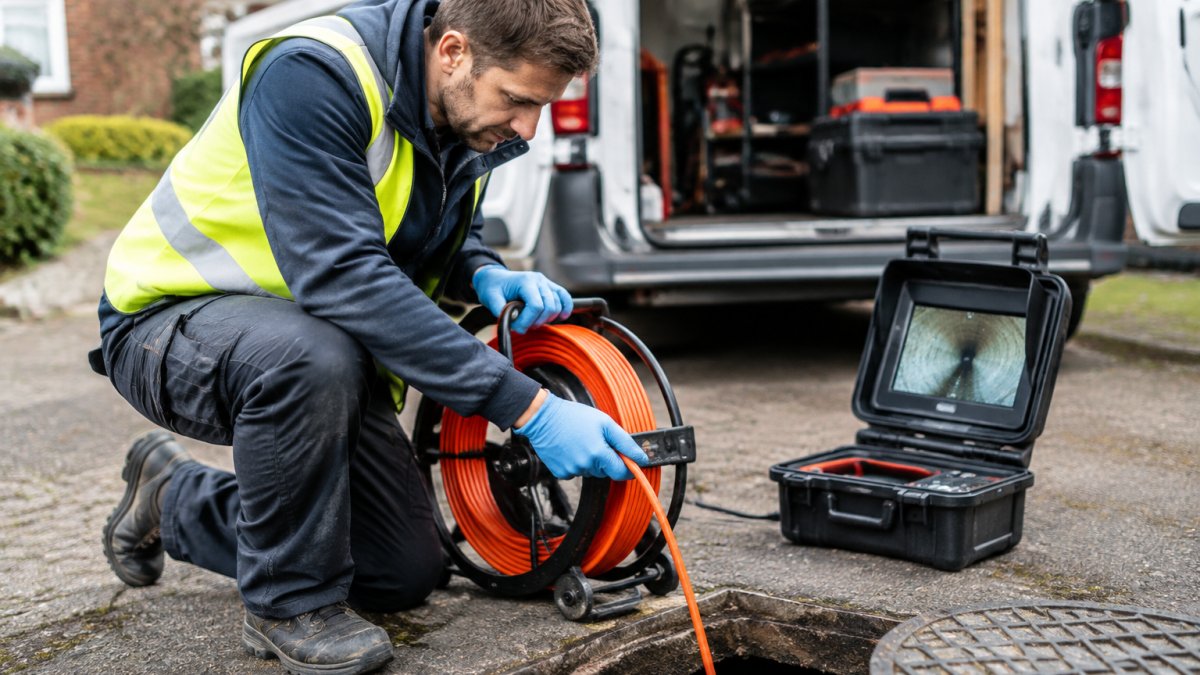
Take photographs of the blockage, any water damage and the access point before any work starts. If you need a survey to document the fault, you can book domestic drainage work, including CCTV surveys, across Essex and East London. Keep every invoice and report. A CCTV survey report is often the strongest evidence, because it shows the cause of the fault in plain terms, a collapsed clay joint, a root intrusion at a specific metreage, or a build-up of fat and wipes.
Step 4: Expect a loss adjuster for larger claims
For claims above a few hundred pounds, or where the cause is disputed, the insurer may appoint a loss adjuster to inspect the drain. Adjusters' attendance times vary, and emergency sewage cases are often prioritised. The adjuster will want to see the CCTV footage, the contractor's report and evidence of the drain's condition before the incident.
Step 5: Keep the paperwork together
Keep the policy schedule, the claim reference, the contractor's invoice, the CCTV report and any correspondence in one file.
Watch out: authorising a contractor to carry out a permanent repair before the insurer has approved the claim can leave you liable for the full cost, even where the cause would have been covered.
DIY Checks Versus Calling a Professional Drainage Engineer
Some drain problems can be tackled safely at home. A plunger or a hand auger may clear a blockage in a single sink or basin.
Call a professional when several fittings back up at once, when a foul smell persists, or when water rises in a manhole or inspection chamber. These signs suggest a fault in the main drain rather than a local blockage.
Comparing Policies and Deciding Whether Drainage Cover Is Worth It
Most national comparison guides stop at 'compare the limit, the excess and the exclusions'. That is necessary but not sufficient, particularly in Brentwood and the wider Essex area, where the housing stock and soil conditions change the risk profile from one street to the next. The comparison below adds the local factors that generic guides miss.
The four policy points that actually matter
Compare policies on four points: the annual limit, the excess, the exclusions and the list of approved contractors. A cheaper premium is not much use if the cover excludes the cause of your likely problem. Ask each insurer to confirm in writing whether it covers external drains, older pipework and tree root damage. A policy that covers only drains within the property boundary, for example, will not help with a shared drain under the front garden that serves two or three neighbours, a common arrangement in older Brentwood terraces.
Local risk factors that change the calculation
Clay soils shift with the seasons, and that movement can contribute to joint separation and cracking in older drains.
Water hardness is a secondary factor. Hard water can contribute to scale build-up in older pipework over time. That is a maintenance issue rather than an insured event, and regular maintenance or CCTV checks may be worth considering alongside insurance.
Weighing premium against likely repair cost
Whether cover is worth buying depends on the property, but the decision is more concrete than 'it depends'. The cost of repairing a collapsed drain depends on depth, access and any reinstatement needed.
A practical test: ask yourself what the worst realistic drainage repair on your property would cost, and compare that with the annual premium plus the excess.
Questions to put to each insurer in writing
Before you buy, ask each insurer to confirm: whether external and shared drains are covered; whether tree root damage is covered or excluded as gradual damage; whether older clay or cast-iron pipework is covered without a pre-inception survey; what the excess is per claim and whether a separate drainage excess applies; and whether the insurer's approved contractor network operates in the Brentwood area with out-of-hours attendance.
Watch out: a policy that looks competitive on premium can exclude tree root damage and shared drains, the two most common causes of expensive drainage claims in older Essex properties, leaving you paying for cover that will not respond when you need it most.
Getting Your Drains Assessed Before You Need to Claim
A baseline inspection is one of the most useful steps you can take before a problem arises.
BrightFlow Limited offers drain inspection and maintenance for homes and businesses across Essex and East London.
Speak to BrightFlow Limited about a drain survey before your next renewal. We will show you what is working, what needs attention and what your policy is likely to cover.
Frequently Asked Questions
Does home insurance cover drainage repairs in the UK?
Many UK home insurance policies cover sudden damage to drains and pipes, such as a burst or collapse, but usually do not pay for gradual blockages, general wear and tear or routine clearing. Whether drains are covered depends on whether they sit within the buildings policy, a standalone drainage cover add-on, or an emergency home cover product. Check the policy wording for the excess, annual claim limit and whether underground drainage outside the property boundary is included. Request a quote from BrightFlow Limited for more information on our services.
Are blocked drains covered by insurance?
Blocked drain insurance cover is typically limited. Policies often pay to clear a blockage that has caused sudden damage, but they commonly exclude blockages caused by grease, debris build-up, or lack of maintenance. Insurers may also require evidence from a qualified plumber that the cause was not preventable. A CCTV drain survey can help show the condition of the drain. Always keep invoices and photographs before any clearing work starts.
What should I check in my policy before making a drainage claim?
Look for the policy excess, the annual claim limit for drainage work, and whether underground pipes outside the boundary are covered. Check the exclusions section for wear and tear, tree root damage and poor maintenance, as these are common reasons for refusal in older properties. Confirm whether you need to use an approved contractor. Insurers often expect a written report explaining the cause and the repair. Contacting your insurer before booking work avoids disputes over unapproved costs.
Are drainage insurance exclusions common in older properties?
Yes. Older houses in Essex and East London often have clay pipes, cast iron drains and older joints that fail through gradual deterioration. Insurers frequently exclude damage caused by age, corrosion and tree roots, and may refuse cover where a property has a history of repeated blockages. Ask your insurer or broker to confirm how the policy treats older pipework before you need to claim, and arrange a CCTV survey to document the condition of the drains.

Comments